NAD+ Biology: Redox Biochemistry and Cellular Energy Metabolism
Nicotinamide adenine dinucleotide (NAD+) is a ubiquitous coenzyme present in all living cells, functioning as an essential electron carrier in oxidation-reduction reactions that underlie cellular energy metabolism. NAD+ accepts hydride equivalents (a proton plus two electrons) from metabolic substrates to become NADH, which serves as the primary electron donor for the mitochondrial electron transport chain (ETC). In glycolysis, the citric acid cycle, and fatty acid beta-oxidation, NAD+-dependent dehydrogenases (lactate dehydrogenase, malate dehydrogenase, isocitrate dehydrogenase, alpha-ketoglutarate dehydrogenase, succinate dehydrogenase-adjacent enzymes) collectively generate the NADH that drives ATP synthesis via Complex I and subsequent ETC activity.
Beyond redox biochemistry, NAD+ serves as a substrate — rather than a cofactor — for three major classes of NAD+-consuming enzymes: sirtuins (NAD+-dependent protein deacylases), poly(ADP-ribose) polymerases (PARPs, involved in DNA damage response), and CD38 (a cyclic ADP-ribose hydrolase with roles in calcium signaling and innate immunity). These enzymatic reactions consume NAD+ rather than cycling it, creating a biosynthetic demand for NAD+ replenishment through the salvage pathway (from nicotinamide via NAMPT) or the de novo synthesis pathway (from tryptophan via the kynurenine pathway).
Total cellular NAD+ concentrations range from approximately 200–500 μM depending on cell type and metabolic state, with the mitochondrial pool constituting a significant fraction. Cytoplasmic and mitochondrial NAD+ pools are functionally compartmentalized — NAD+ does not freely cross the inner mitochondrial membrane, and separate biosynthetic and salvage machinery exists in each compartment. The mitochondrial NAD+ pool is preferentially used by the ETC and TCA cycle enzymes, while the cytoplasmic pool serves glycolytic dehydrogenases and cytoplasmic sirtuins and PARPs.
Sirtuin Research: Deacetylation, Mitochondrial Biogenesis, and DNA Repair
Sirtuins (SIRT1-7 in mammals) are NAD+-dependent protein deacylases — enzymes that remove acetyl groups (and in some cases succinyl, malonyl, or other acyl groups) from lysine residues in target proteins, using NAD+ as the co-substrate and generating nicotinamide (NAM) and 2'-O-acetyl-ADP-ribose as products. Because their catalytic activity requires NAD+ consumption (not merely binding), sirtuin activity is directly coupled to cellular NAD+ availability, providing a molecular mechanism by which energy status and NAD+ concentrations regulate the epigenetic and metabolic landscape of the cell.
SIRT1, the founding mammalian sirtuin, deacetylates a broad range of nuclear and cytoplasmic substrates. Its deacetylation of PGC-1α (peroxisome proliferator-activated receptor gamma coactivator 1 alpha) activates this master transcriptional coactivator of mitochondrial biogenesis, stimulating expression of genes encoding electron transport chain components, mitochondrial transcription factor A (TFAM), and mitochondrial fission/fusion regulators. In aged tissues, declining NAD+ concentrations reduce SIRT1 activity, PGC-1α hyperacetylation accumulates, and mitochondrial biogenesis decreases — contributing to the mitochondrial dysfunction characteristic of aged tissues.
SIRT3, the primary mitochondrial sirtuin, deacetylates and activates several TCA cycle and ETC enzymes including isocitrate dehydrogenase 2 (IDH2), succinate dehydrogenase (complex II), and long-chain acyl-CoA dehydrogenase (LCAD). SIRT3-KO mice show hyperacetylation of these mitochondrial proteins, impaired complex I activity, increased mitochondrial ROS, and accelerated aging phenotypes. SIRT6 is primarily nuclear and deacetylates H3K9 and H3K56 at DNA damage sites, promoting double-strand break repair by homologous recombination and regulating telomeric chromatin. SIRT6-deficient mice show dramatically accelerated aging and genome instability, underscoring the importance of this sirtuin in aging biology.
PARP Pathway: DNA Damage Response and NAD+ Consumption
Poly(ADP-ribose) polymerases (PARPs) are a family of enzymes that catalyze the transfer of ADP-ribose units from NAD+ to target proteins, building linear or branched poly(ADP-ribose) (PAR) chains on glutamate and aspartate residues in the context of DNA damage signaling. PARP1 and PARP2 are the primary DNA damage-responsive family members, activated by binding directly to DNA strand breaks through their zinc finger DNA-binding domains. PARP1 activity accounts for approximately 80–90% of total cellular PAR synthesis following genotoxic stress.
Upon DNA damage activation, PARP1 consumes NAD+ at extremely high rates — each activated PARP1 molecule can transfer hundreds to thousands of ADP-ribose units per minute, representing a massive drain on cellular NAD+ pools. This rapid NAD+ depletion during extensive DNA damage can impair sirtuin function, reduce oxidative phosphorylation efficiency, and in extreme cases trigger a form of non-apoptotic cell death called parthanatos (PARP-dependent cell death), driven by severe energy depletion.
The PAR chains synthesized by PARP1 serve as scaffolds recruiting DNA repair machinery — the base excision repair (BER) complex assembles at PAR-marked damage sites through PAR-binding domains in XRCC1, DNA ligase III, and DNA polymerase beta. After repair is complete, PAR glycohydrolase (PARG) cleaves PAR chains, releasing ADP-ribose and allowing recycling through the NAD+ salvage pathway. In aging research, the competition between PARPs and sirtuins for the NAD+ pool is considered a key regulatory dynamic — increased DNA damage in aged cells (from accumulated oxidative damage and telomere dysfunction) chronically activates PARPs, depleting the NAD+ available for sirtuin-mediated adaptive responses.
CD38 as NAD+ Consumer: Age-Related Depletion Mechanisms
CD38 is a multifunctional transmembrane glycoprotein with both NAD+ glycohydrolase (converting NAD+ to ADP-ribose and nicotinamide) and cyclic ADP-ribose (cADPR) synthase activities. Originally identified as a lymphocyte cell surface antigen, CD38 is now recognized as a major driver of age-related NAD+ decline in multiple tissues. Unlike sirtuins and PARPs, which use NAD+ stoichiometrically in defined regulatory reactions, CD38 appears to function primarily as a "NAD+-degrading enzyme" — its rate of NAD+ consumption can dominate total cellular NAD+ turnover particularly as its expression increases with age.
Multiple studies have documented a dramatic age-related increase in CD38 expression and activity in mouse and human tissues. In liver, skeletal muscle, and white adipose tissue, CD38 protein levels increase 2–8 fold between young (3-month) and aged (24-month) mice, correlating inversely with tissue NAD+ concentrations and SIRT1/SIRT3 activities. Genetic CD38 knockout in mice prevents age-related NAD+ decline, maintains mitochondrial function, and improves metabolic parameters (oxygen consumption, insulin sensitivity) in aged animals compared to wild-type age-matched controls. Pharmacological CD38 inhibition with 78c (a small molecule NAD+-competitive CD38 inhibitor) phenocopies the genetic knockout in restoring NAD+ and improving mitochondrial function in aged mice.
The upstream drivers of CD38 upregulation with aging remain an active research area. Current evidence implicates age-related inflammatory signaling (SASP factors including IL-6 and TNF-α drive CD38 expression on macrophages and stromal cells via NF-κB) as a primary mechanism. This connects the "inflammaging" phenomenon to NAD+ depletion through a CD38-mediated mechanism, suggesting that reducing senescent cell burden (and SASP) might indirectly preserve NAD+ by reducing CD38 induction.
Mitochondrial Function: Complex I and TCA Cycle Regulation
NAD+ is most directly relevant to mitochondrial function through its role as the electron acceptor for the TCA cycle dehydrogenases and the regeneration of NAD+ from NADH by Complex I (NADH:ubiquinone oxidoreductase) of the ETC. Complex I is the entry point for electrons derived from NADH oxidation into the ETC, coupling the two-electron oxidation of NADH back to NAD+ with the translocation of four protons across the inner mitochondrial membrane per electron pair, contributing to the proton gradient used by ATP synthase (Complex V) to drive ATP synthesis.
The NAD+/NADH ratio in the mitochondrial matrix is thus a direct measure of the redox state and energetic capacity of the mitochondrion. A high NAD+/NADH ratio indicates an oxidized (energetically active) state capable of sustaining TCA cycle flux. A low ratio (reduced state, NADH accumulation) impairs TCA cycle dehydrogenase activities due to product inhibition and reflects ETC bottlenecking. In aged mitochondria, Complex I activity and assembly are compromised, NADH tends to accumulate, and the resulting reductive pressure drives increased superoxide generation at Complex I and Complex III.
SIRT3-mediated deacetylation of Complex I subunits (NDUFS1, NDUFA9) is required for full Complex I activity — in SIRT3-KO mice, hyperacetylation of these subunits reduces Complex I activity by approximately 30–40% compared to wild-type. Since SIRT3 activity depends on mitochondrial NAD+ availability, NAD+ depletion in aged mitochondria creates a feed-forward cycle: reduced NAD+ → reduced SIRT3 activity → hyperacetylated Complex I subunits → reduced Complex I activity → reduced NADH oxidation → further NAD+ depletion. Supplementation research in aged rodent models aims to break this cycle by providing additional NAD+ substrate.
Neurological Research: NAMPT, Neuronal Survival, and Cognitive Models
NAMPT (nicotinamide phosphoribosyltransferase) is the rate-limiting enzyme in the NAD+ salvage pathway, catalyzing the conversion of nicotinamide (NAM) to nicotinamide mononucleotide (NMN), which is subsequently converted to NAD+ by NMNAT enzymes. NAMPT exists in both an intracellular form (iNAMPT) that sustains cellular NAD+ biosynthesis and a secreted form (eNAMPT, also called PBEF or visfatin) that can function as a cytokine and may have extracellular enzymatic activity. NAMPT expression and activity are critical determinants of neuronal NAD+ concentrations and neuronal survival capacity.
In models of neurodegeneration, NAMPT downregulation accelerates neuronal death following excitotoxic or ischemic stress, while NAMPT overexpression is neuroprotective. In focal cerebral ischemia (MCAO) rodent models, NAMPT-transgenic mice show reduced infarct volume, better neurological scores, and higher cortical NAD+ concentrations at 24 hours post-ischemia compared to wild-type controls. The mechanistic basis involves NAMPT-sustained SIRT1 activity protecting neurons from p53-mediated and FoxO-mediated pro-apoptotic transcription programs.
Alzheimer's disease research has identified NAD+ metabolism as a relevant pathway through multiple convergent mechanisms: amyloid-beta oligomers activate PARP1 via DNA damage induction, depleting neuronal NAD+; tau pathology impairs mitochondrial function and NADH oxidation; and aging-related NAD+ decline reduces SIRT1 activity, which normally deacetylates and destabilizes BACE1 (the beta-secretase responsible for amyloidogenic APP cleavage). Studies in APP/PS1 and 3xTg-AD mice using NAD+ precursor supplementation (NMN, NR) have reported improvements in behavioral testing, reduced amyloid burden, and improved mitochondrial function, providing a framework for interpreting research using direct NAD+ administration.
NMN vs NR vs Direct NAD+: Precursor and Direct Administration Research
The research landscape for NAD+ augmentation encompasses three principal approaches: administration of NAD+ precursors (nicotinamide riboside, NR; nicotinamide mononucleotide, NMN), administration of the coenzyme itself, and inhibition of NAD+-consuming enzymes (particularly CD38). Each approach has distinct pharmacokinetic and bioavailability profiles that inform research protocol design.
NR (nicotinamide riboside, molecular weight 255.25 Da as the free base) is a pyridine nucleoside that enters cells via specific nucleoside transporters (Slc29a1, Slc29a2) and is converted intracellularly to NMN by NRK1/2 (nicotinamide riboside kinases), then to NAD+ by NMNAT1-3. Oral NR is absorbed efficiently from the gastrointestinal tract and has been demonstrated in human clinical studies to raise whole blood NAD+ concentrations in a dose-dependent manner. NMN (nicotinamide mononucleotide, molecular weight 334.22 Da) enters cells partly via the Slc12a8 transporter recently characterized in the small intestinal epithelium, and partly through extracellular dephosphorylation to NR followed by NR uptake. Oral NMN supplementation similarly raises tissue NAD+ in rodent models and human participants.
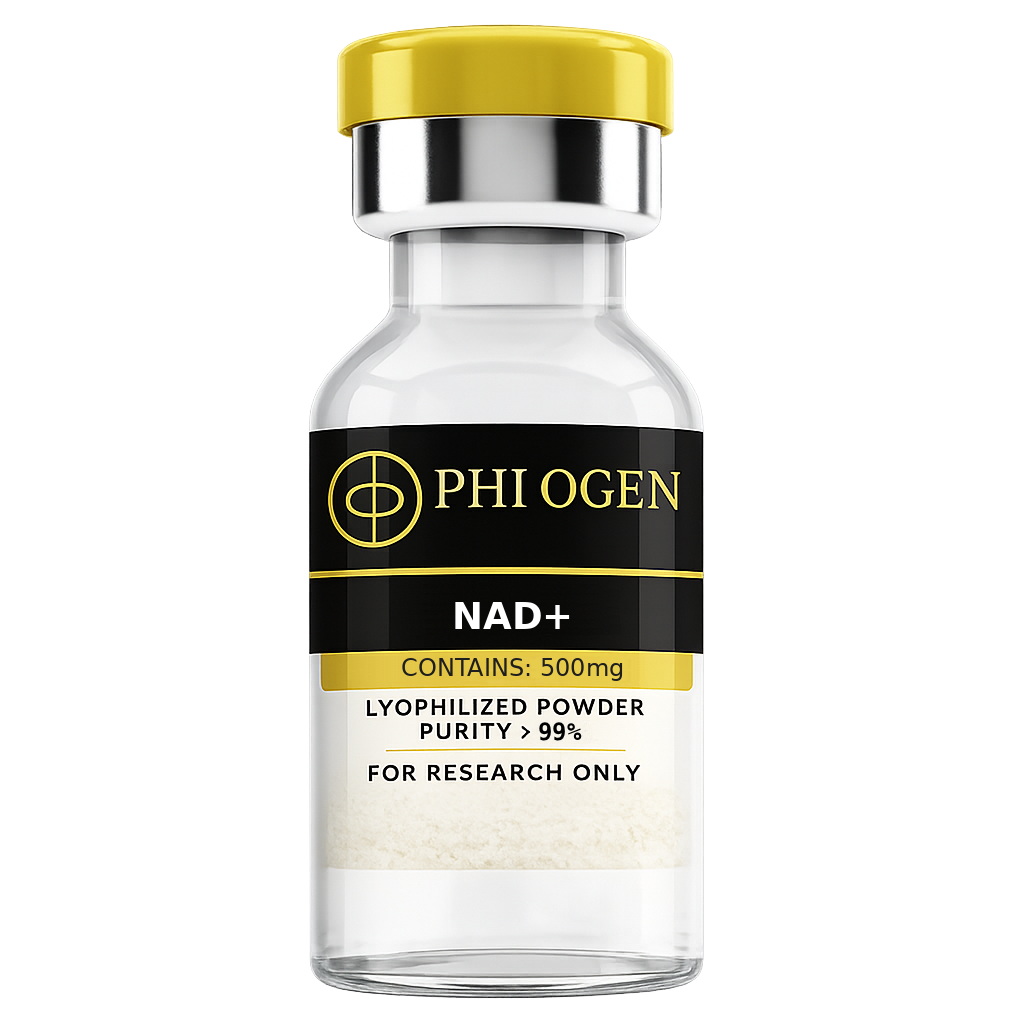
Direct NAD+ administration — particularly intravenous or intraperitoneal — bypasses the precursor conversion steps and allows for more acute, controlled elevation of circulating and tissue NAD+ concentrations in research settings. At the 500 mg dose level in rodent models, intraperitoneal NAD+ produces a rapid but transient elevation in plasma NAD+ (peak within 30 minutes) followed by redistribution into tissues. Subcutaneous administration produces a slower absorption profile with a more sustained but lower peak concentration. Comparison studies in aged mice suggest that direct NAD+ administration and NMN produce equivalent tissue NAD+ elevation at 4–6 hours post-administration, but with different time-to-peak kinetics, making the choice of administration route dependent on whether acute or sustained signaling is the research objective.
Research Dosing at 500mg: Pharmacokinetics and Protocol Design
Research protocols employing NAD+ at the 500 mg scale in rodent models require consideration of the relatively rapid plasma clearance of exogenous NAD+ and the tissue-specific differences in NAD+ uptake and utilization. Pharmacokinetic studies of intraperitoneal NAD+ in mice (body weight 25–30 g) using doses of 250–500 mg/kg demonstrate peak plasma concentrations within 15–30 minutes, with plasma half-life of approximately 2–4 hours. Tissue NAD+ in liver, kidney, and brain shows a more sustained elevation (4–8 hours) reflecting the slower equilibration between plasma and intracellular compartments, with brain NAD+ elevation being the most modest due to limited NAD+ transport across the blood-brain barrier.
Subcutaneous administration of NAD+ at 500 mg/kg in rodents produces a flatter, broader pharmacokinetic profile: peak plasma concentration approximately 50–60% of the intraperitoneal peak, but sustained above baseline for 6–10 hours. This profile may be preferable for experiments examining longer-duration downstream effects (SIRT1-mediated transcription, mitochondrial biogenesis) that require sustained NAD+ availability rather than an acute spike. For once-daily dosing protocols, subcutaneous administration is also more practical and less stressful to animals than repeated IP injections.
In the context of research investigating NAD+ effects on aging parameters in rodent models, studies using 500 mg/kg/day NAD+ (various routes) for 8–16 weeks in aged mice have reported significant improvements in measures including rotarod performance (motor coordination), grip strength, treadmill endurance, and skeletal muscle mitochondrial function (citrate synthase activity, Complex I respiration in isolated mitochondria). These functional improvements correlate with maintained tissue NAD+ concentrations in treated aged animals comparable to those measured in young mice, providing pharmacodynamic validation of the dosing strategy and supporting the hypothesis that NAD+ repletion can functionally reverse some aspects of age-related mitochondrial dysfunction.