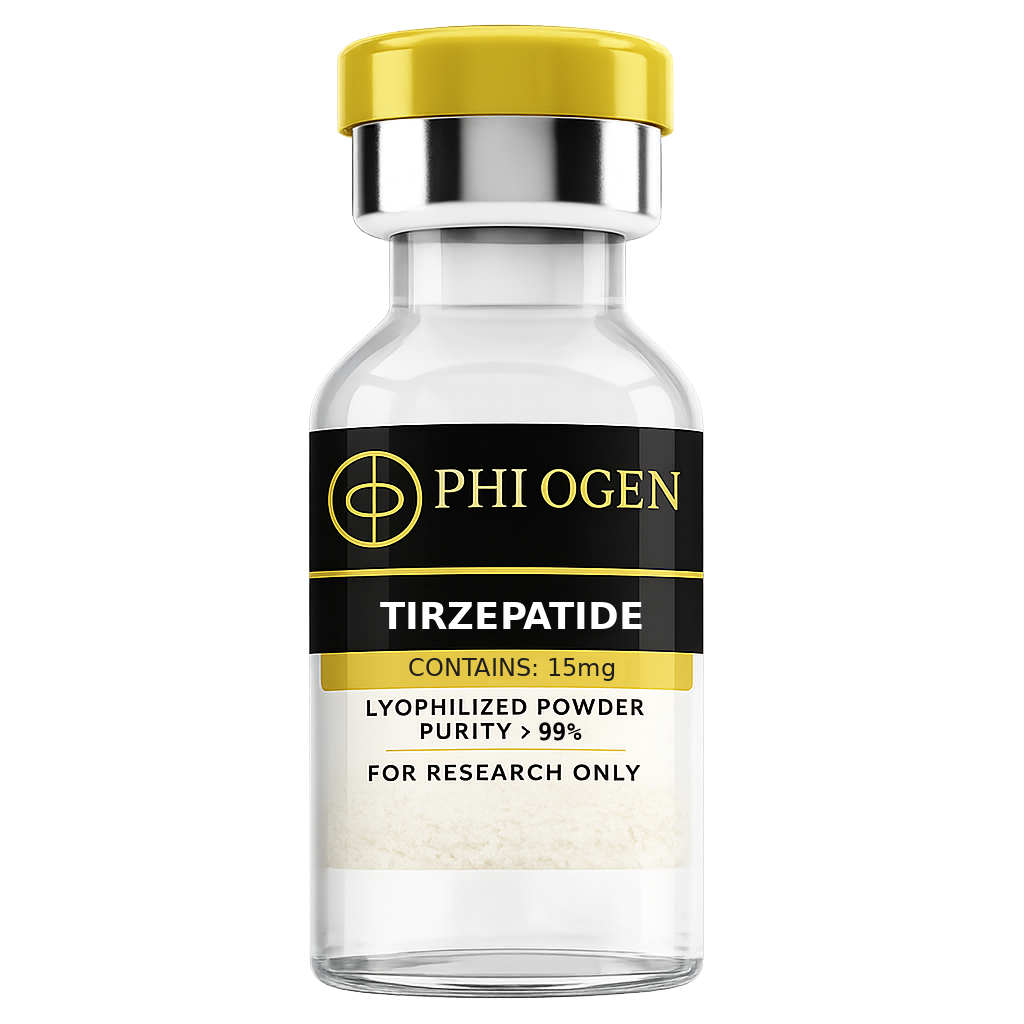
First-in-Class Dual Agonist: Historical Development of Tirzepatide
Tirzepatide represents the first approved therapeutic agent with dual agonist activity at both the glucose-dependent insulinotropic polypeptide receptor (GIPR) and the glucagon-like peptide-1 receptor (GLP-1R). The development of a single peptide molecule capable of activating two structurally related but pharmacologically distinct class B GPCRs required over a decade of medicinal chemistry innovation beginning in the early 2010s at Eli Lilly and Company, building on foundational incretin research from the preceding three decades.
The conceptual origin of dual GIP/GLP-1 agonism traces to observations by Nauck et al. (1993) demonstrating that the hyperglycemia-induced insulinotropic effect of GLP-1 was preserved in type 2 diabetes while the corresponding GIP effect was severely diminished. This "GIP resistance in type 2 diabetes" was initially interpreted to suggest that GIPR agonism would be pharmacologically futile in the insulin-resistant state. This interpretation dominated the field for approximately 15 years and discouraged investment in GIPR-targeted drug development.
The reassessment of GIPR pharmacology began with Finan et al.'s 2013 publication in Science Translational Medicine, which demonstrated in diet-induced obese rodents that GIPR agonism combined with GLP-1R agonism produced synergistic weight loss and glycemic improvement that could not be attributed to GLP-1R effects alone. Critically, these benefits were observed in the insulin-resistant state — contradicting the earlier interpretation of GIPR as pharmacologically inactive in obesity. This data was the immediate preclinical foundation for the tirzepatide program.
The first tirzepatide molecular precursor (LY3298176) entered Phase 1 clinical development in 2016. The Phase 1 single-ascending dose and multiple-ascending dose studies confirmed the long half-life (consistent with the fatty diacid albumin-binding design), acceptable tolerability profile, and dose-dependent glycemic effects. Phase 2 data in 2019 (the SURPASS-J-combo study) demonstrated proof-of-concept for the dual mechanism in humans with type 2 diabetes. The Phase 3 SURPASS program launched in 2019 with FDA approval for type 2 diabetes granted in May 2022 under the brand name Mounjaro, followed by approval for chronic weight management (Zepbound) in November 2023.
Mechanism Comparison: Tirzepatide vs. Semaglutide at the Receptor Level
Semaglutide (the active molecule in Ozempic and Wegovy) is a GLP-1R selective agonist and the immediate comparator against which tirzepatide's dual mechanism is most frequently benchmarked. Understanding the molecular pharmacological differences between these two agents — both at the receptor level and in downstream signaling — is fundamental context for any tirzepatide research program.
At the GLP-1R, both semaglutide and tirzepatide are peptide agonists with substantially higher GLP-1R affinity than endogenous GLP-1 (half-life 1–2 minutes) because both incorporate structural modifications that confer albumin binding and resistance to DPP-4 cleavage. Semaglutide achieves this through a C18 fatty diacid linked via a hydrophilic spacer to the K26 position, while tirzepatide uses a C20 diacid at K26 via a longer mini-PEG linker. These structural differences produce distinct receptor binding kinetics: semaglutide binds GLP-1R with high affinity (Ki approximately 0.19 nM) and recruits β-arrestin-2 with potency close to its cAMP EC50, while tirzepatide binds GLP-1R with somewhat lower affinity (Ki approximately 1.7 nM) but with biased signaling favoring cAMP over β-arrestin-2.
The β-arrestin bias has functional consequences for receptor internalization kinetics: semaglutide drives more rapid GLP-1R internalization than tirzepatide in cell-based fluorescent receptor trafficking assays. Greater internalization is associated with reduced GLP-1R plasma membrane density during chronic dosing, which could contribute to tachyphylaxis. Tirzepatide's GLP-1R bias profile is therefore predicted to produce more sustained GLP-1R plasma membrane expression and more durable receptor-mediated signaling — a hypothesis that is consistent with the greater weight loss efficacy observed in SURPASS-2's head-to-head comparison.
Beyond the receptor pharmacology, semaglutide and tirzepatide differ in their hepatic glucose production suppression profiles. Both agents reduce fasting glucagon, but tirzepatide shows greater suppression of glucagon in the SURPASS trials (approximately 25–30% glucagon reduction) compared to semaglutide's approximately 15–20% reduction in SUSTAIN trials, consistent with an additive GIPR-mediated glucagonostatic effect at the pancreatic α-cell (which expresses both GIPR and GLP-1R).
GIPR Agonism Controversy: The GIP Amyloid Debate and Its Resolution
One of the most unusual scientific controversies in recent incretin pharmacology concerns the amyloidogenic potential of GIP peptides. Amyloid formation — the aggregation of peptides or proteins into insoluble β-sheet–rich fibrils — is associated with several human diseases including type 2 diabetes (islet amyloid polypeptide, IAPP) and neurodegenerative conditions. The observation that certain GIP analogs could form amyloid-like aggregates under specific in vitro conditions raised concerns about the safety of GIPR-targeted therapeutics.
The controversy originated from structural biology studies of synthetic GIP peptides showing that the C-terminal region of GIP (residues 22–42) can adopt β-sheet secondary structure under low-pH, high-concentration conditions in vitro. Some researchers extended this observation to propose that therapeutic GIPR agonists with C-terminal modifications might have increased amyloidogenic potential, potentially contributing to islet amyloid deposition and long-term β-cell dysfunction.
This concern was definitively addressed by multiple lines of evidence in the tirzepatide research program. First, the amyloidogenic conditions required for GIP peptide β-sheet formation (pH < 4.0, peptide concentrations > 1 mM) are physiologically irrelevant — plasma GIP concentrations peak at approximately 50–100 pM during a mixed meal, orders of magnitude below the amyloidogenic threshold. Second, the fatty diacid C20 modification in tirzepatide disrupts the β-sheet–forming C-terminal region by introducing a bulky hydrophobic modification that sterically prevents the intermolecular hydrogen bonding required for amyloid nucleation. Thioflavin T fluorescence assays comparing native GIP, GIP analogs, and tirzepatide confirmed that tirzepatide does not form thioflavin T-positive aggregates under physiological or accelerated stress conditions.
Third, the histological analyses from the SURPASS and SURMOUNT trials, which included pancreatic enzyme and endocrine panel monitoring, did not show any signal consistent with increased islet amyloid deposition. IAPP levels (the primary constituent of islet amyloid, cosecretion marker of insulin) were not elevated in tirzepatide-treated subjects relative to placebo. The GIP amyloid debate is therefore considered resolved in the tirzepatide literature: the specific molecular design of tirzepatide precludes amyloidogenic behavior at physiological conditions.
Entry Point for Dual Agonist Research: Single-Vial Experimental Applications
The 15 mg single vial represents the natural entry point for research teams initiating a tirzepatide research program. A single 15 mg vial provides sufficient material to conduct the initial experimental designs that establish the investigator's technical competency with the compound — reconstitution methodology, dilution accuracy, route-specific dosing SOPs — before committing to larger multi-vial procurement.
For receptor pharmacology studies, a single 15 mg vial provides ample material for concentration-response curve construction in cell-based GLP-1R and GIPR activation assays. A standard cAMP HTRF assay run at concentrations ranging from 0.001 nM to 1000 nM (11 points, 3 replicates each) in 384-well format consumes approximately 0.2–0.5 µg of peptide per plate — meaning a 15 mg vial provides material for thousands of individual assay wells, enabling replicate experiments, counter-assay controls (β-arrestin recruitment, GαS IP1 accumulation), and long-term storage of aliquots for future experiments.
For in vivo rodent pharmacology research, the single vial supports acute mechanistic studies in small cohorts. At a research dose equivalent to the human 15 mg clinical dose scaled by body surface area (approximately 1–3 mg/kg in mice), a 30 g mouse receives 30–90 µg per injection. A 15 mg vial therefore supports approximately 166–500 individual mouse doses, sufficient for a well-powered acute in vivo study (n=8–10 per group, 3–5 groups) with material remaining for repeat studies.
The single-vial format also serves as the procurement unit for feasibility studies — pilot experiments designed to validate an endpoint methodology before designing a powered longitudinal study. A researcher testing, for example, whether tirzepatide affects β-cell function markers measurable by a specific assay protocol would use a single vial for the pilot before committing to a 10-pack for the powered study. The 15 mg single vial is therefore the research equivalent of a phase 1 study: a necessary first step before larger-scale commitment.
GLP-1 Receptor Biology: Structure, Signaling, and Research Implications
The GLP-1 receptor is a class B1 G protein-coupled receptor encoded by the GLP1R gene on chromosome 6p21.1 in humans. The receptor is a 463-amino-acid polypeptide with seven transmembrane helices, a large N-terminal extracellular domain (ECD), and three extracellular loops that together form the peptide agonist binding site. The ECD is responsible for the initial high-affinity capture of the GLP-1 or analog N-terminus, while the transmembrane core domain mediates signaling through conformational change.
The two-domain binding model for GLP-1R activation was established by X-ray crystallography and cryo-EM structural studies. The C-terminus of GLP-1 (residues 7–15) binds to the ECD with relatively low affinity, while the N-terminus (residues 7–12) inserts into the transmembrane bundle and drives receptor activation. This sequential two-step binding allows peptide agonists with modifications at the C-terminus (such as the fatty diacid in tirzepatide and semaglutide) to retain full receptor activation despite the steric bulk of the modification, because the modification is distal to the activating N-terminal region.
For tirzepatide research using the single vial, the structural biology of GLP-1R is directly relevant to understanding why different GLP-1R agonists have different potency and bias profiles. The cryo-EM structure of tirzepatide-bound GLP-1R (published by Bueno et al., 2020, PNAS) revealed that tirzepatide engages a partially distinct transmembrane binding mode compared to semaglutide, including contacts with transmembrane helix 6 that are not present in the semaglutide-GLP-1R structure. These structural differences correlate with the differential β-arrestin recruitment profiles and may explain the biased agonism phenotype of tirzepatide at GLP-1R.
Single-nucleotide polymorphisms (SNPs) in GLP1R are clinically relevant to tirzepatide research because they predict individual variation in response. The most studied polymorphism is the Arg131Gln variant (rs2268641), which is associated with reduced GLP-1R expression in pancreatic islets and lower incretin effect. Research designs using the single vial for pharmacogenomic studies should genotype subjects for GLP1R SNPs as baseline stratification variables to understand genotype-response relationships.
GIPR Molecular Pharmacology: Receptor Structure and Adipose Tissue Signaling
The GIP receptor (GIPR) is a class B1 GPCR encoded by the GIPR gene on chromosome 19q13.32. The mature human receptor is 466 amino acids with an N-terminal extracellular domain that bears structural and sequence homology to GLP-1R, reflecting their common evolutionary origin from a glucagon receptor ancestor. Despite this structural homology, GIPR and GLP-1R have distinct tissue expression patterns: GIPR shows high expression in pancreatic β-cells, adipose tissue (both white and brown), bone (osteoblasts and osteoclasts), the pituitary gland, and the kidney, while central nervous system GIPR expression is more restricted than GLP-1R expression.
GIPR signaling in adipose tissue is the mechanistically most important site for tirzepatide's weight loss pharmacology. In differentiated human adipocytes, GIPR activation via cAMP/PKA signaling drives multiple metabolic effects that are highly context-dependent. In the fed state (high circulating insulin, positive energy balance), GIPR activation promotes lipogenesis through PKA-mediated activation of hormone-sensitive lipase in its anabolic configuration and through CREB-mediated upregulation of FASN and GPAM transcription. In the fasted state or calorie-restricted state (low insulin, negative energy balance), the same GIPR/cAMP signal drives lipolysis through PKA-mediated phosphorylation and activation of hormone-sensitive lipase in its catabolic configuration.
This metabolic switch in GIPR signaling output depending on the energy state context was elucidated by Adriaenssens et al. (2019) using conditional GIPR knockout mice and was confirmed in human adipose tissue explant studies where the lipolytic versus lipogenic balance was modulated by adjusting insulin concentration in the incubation medium. The practical implication for tirzepatide research is that the GIP receptor contribution to weight loss is not a fixed pharmacological constant but depends on the subject's metabolic state — subjects with more severe insulin resistance (lower baseline fasting insulin, impaired adipose tissue insulin signaling) may have a higher proportion of lipolytic GIPR signaling and therefore greater fat mobilization per dose.
For single-vial research designs targeting GIPR mechanistic questions, the most direct experimental approach is ex vivo adipose tissue incubation: small biopsies (subcutaneous abdominal fat) obtained at baseline and following tirzepatide treatment are incubated with and without tirzepatide in conditions simulating fed versus fasted hormonal environments (varying insulin from 0 to 100 nM), and lipolysis (glycerol release into medium) and lipogenesis (14C-glucose incorporation into triglycerides) are measured simultaneously. This dual readout characterizes the adipocyte GIPR signaling switch in the specific metabolic context of each research subject.
Translational Research Context: From Rodent Models to Human Study Design
Translational research using tirzepatide spans a wide range of experimental models, from in vitro receptor binding assays through organoid systems, primary cell cultures, ex vivo tissue preparations, rodent in vivo studies, and ultimately human clinical mechanistic studies. Understanding the translational gaps between these model systems is essential for researchers designing first-in-human or bridging studies starting from a single vial of tirzepatide at the maximum Phase 3 dose.
The rodent-to-human translation of tirzepatide pharmacology involves several important considerations. First, body weight–normalized doses: mice require approximately 1–3 mg/kg for metabolic effects equivalent to human weight-loss doses (0.2 mg/kg for the 15 mg dose in a 75 kg human). This 5–15-fold higher body weight–normalized dose requirement in mice is typical for peptide therapeutics where allometric scaling applies. Second, receptor expression levels: GLP-1R density in mouse hypothalamic neurons is substantially higher relative to body weight than in humans, which may explain why rodent weight loss data (typically 20–30% body weight reduction in DIO mice) sometimes exceed or match human clinical data despite the different allometric dosing. Third, the relevance of genetic background: C57BL/6J DIO mice are the standard metabolic research model, but their specific lipid metabolism genetics differ from most human populations, particularly regarding GIPR adipose tissue signaling (DIO mice are more sensitive to GIPR-mediated fat mobilization than lean controls).
For single-vial first-experiments in a new tirzepatide research program, standardized reference assays serve as quality controls before deploying the material in novel experimental designs. The reference assays are: GLP-1R cAMP assay (EC50 should be approximately 0.4–0.5 nM), GIPR cAMP assay (EC50 should be approximately 0.05–0.07 nM), and binding displacement assay at GLP-1R (Ki approximately 1.5–2.5 nM using [125I]-GLP-1 radioligand). Results outside these ranges indicate potential issues with peptide integrity, improper reconstitution, or batch quality that should be investigated before proceeding to more complex experimental designs.
Regulatory and Documentation Framework for Single-Vial Research
Research use of tirzepatide — even at the single-vial level — occurs within a regulatory and documentation framework that varies by jurisdiction, institutional policies, and the nature of the research (in vitro only, ex vivo tissue, animal in vivo, or human subjects). Understanding this framework is important context for research teams at the planning stage, before committing procurement resources.
In the United States, in vitro and ex vivo research using tirzepatide peptide (as a research chemical, distinct from FDA-approved drug product) falls within standard laboratory chemical safety regulations rather than drug regulations, provided the research does not involve administration to humans. Institutional biosafety committees and chemical hygiene plans apply, as tirzepatide is an active pharmacological agent that requires appropriate handling protocols for personnel protection (particularly for individuals with type 2 diabetes or obesity, who should not self-administer research-grade peptides under any circumstances).
Animal in vivo research using tirzepatide requires IACUC (Institutional Animal Care and Use Committee) approval with a protocol specifying the dose, route, frequency, monitoring parameters, and humane endpoints. Given tirzepatide's known hypoglycemic potential (indirect, through insulin stimulation) and appetite-suppressant effects, IACUC protocols for tirzepatide rodent studies should include monitoring for weight loss exceeding humane endpoints (typically 20% body weight loss from baseline) and blood glucose monitoring to detect hypoglycemia.
Human translational research with tirzepatide requires IRB approval and, in most jurisdictions, IND exemption or equivalent regulatory clearance. The 15 mg single vial represents a natural format for an n=1 proof-of-concept observational study or for supply of a single subject in a multi-site trial where each site receives one vial per study participant per treatment period. Documentation requirements include chain-of-custody records, reconstitution logs, and subject-specific dispensing records that maintain traceability from lot number to individual subject dose.