4-Week Protocol Design: Rationale for the First Steady-State Window
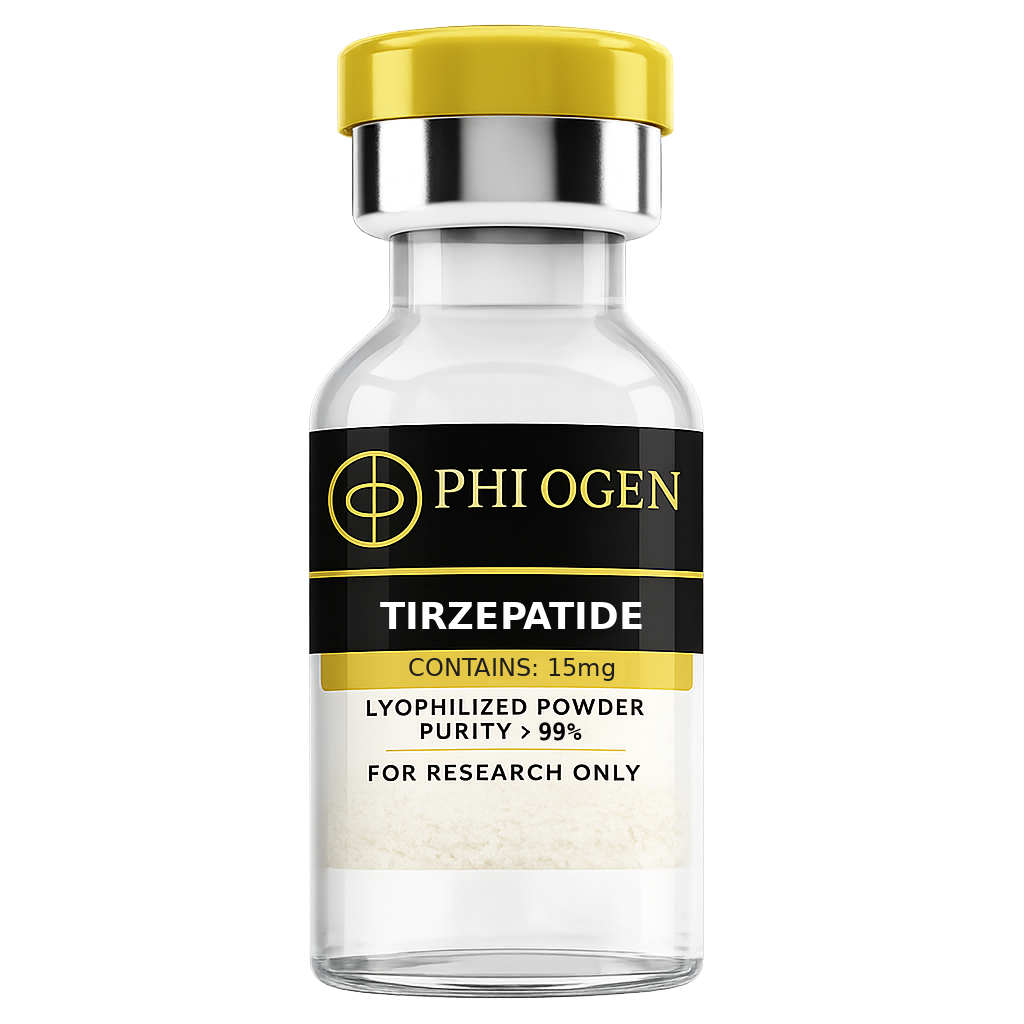
The 15 mg × 4-pack format — delivering 60 mg of tirzepatide across four individually sealed vials — is precisely calibrated to a 4-week research protocol at the maximum clinically studied dose. Four weeks represents a pharmacologically significant horizon for tirzepatide research: it corresponds to the time required to reach steady-state plasma concentrations following once-weekly subcutaneous dosing, the duration of initial dose titration phases in the clinical prescribing schedule, and the minimum window in which meaningful HbA1c trajectory changes can be detected in subjects with pre-existing hyperglycemia.
From a practical protocol design perspective, a 4-week study at 15 mg is well-suited to acute-to-subacute mechanism-of-action experiments. Four weeks is sufficient to observe the early physiological responses that precede structural metabolic adaptation: appetite suppression and reduced energy intake are apparent from week 1; fasting glucose reductions reach near-maximal early-phase effect by week 2–3; triglyceride reduction and LDL-particle remodeling are detectable by week 3–4. These early endpoints are particularly useful for mechanistic hypothesis testing because they reflect direct pharmacological effects of GIP and GLP-1 receptor activation rather than the downstream consequences of extended weight loss.
The 4-week design is also standard in many proof-of-concept human translational studies registered under IRB protocols. Phase 2a mechanistic studies are commonly 4-week duration because they are adequately powered for pharmacodynamic endpoint detection without requiring the logistical resources of a 52-week or 72-week study. The 15 mg × 4-pack provides the exact material for one subject at the maximum dose for this standard timeframe, or four subjects at a single-dose mechanistic study, or a combined design with dose-response arms at 15, 10, 7.5, and 5 mg — one vial per arm — for a comparative pharmacodynamic study.
The 4-pack format also serves as a modular building block for longer studies: two 4-packs cover 8 weeks, three cover 12 weeks, and so on, enabling research teams to scale procurement to their timeline without overstocking.
Steady-State Plasma Concentration Research: Pharmacokinetic Modeling Frameworks
Understanding tirzepatide's steady-state pharmacokinetics is fundamental to interpreting any metabolic research data collected during ongoing dosing. Steady-state concentration represents the equilibrium between drug input (weekly subcutaneous dose) and drug elimination (proteolytic degradation, primarily by dipeptidyl peptidase-4 and neutral endopeptidase, with minor contributions from renal and hepatic clearance of degradation fragments).
The population pharmacokinetic model for tirzepatide, developed from data pooled across the SURPASS phase 3 program (approximately 1,900 participants), is best described by a two-compartment model with first-order subcutaneous absorption and first-order elimination. Key population pharmacokinetic parameters include: apparent clearance (CL/F) of approximately 0.061 L/h, apparent volume of distribution (V/F) of approximately 10.3 L, absorption rate constant (ka) of approximately 0.0536 h⁻¹, and intercompartmental clearance (Q/F) of approximately 0.044 L/h. The mean terminal half-life of 5 days (118 hours) is derived from the terminal elimination phase of this model.
For research designing PK sub-studies within a 4-week tirzepatide protocol, the most informative sampling strategy for steady-state characterization is a sparse sampling design anchored at the following timepoints: pre-dose at week 4 (true trough concentration at steady state), 24 hours post-dose at week 4, 72 hours post-dose at week 4, and 120 hours post-dose at week 4 (mid-interval). These four timepoints, combined with population PK modeling via Bayesian post-hoc estimation, allow individual Cmax, Cmin, and AUC₀–₁₆₈ₕ (area under the curve over one dosing interval) to be estimated with reasonable precision from sparse data.
Individual variability in steady-state exposure is substantial: the coefficient of variation for Cmax and AUC at steady state is approximately 30–40% in the SURPASS population. Body weight is the strongest covariate explaining this variability — lighter-weight individuals have higher exposure at a given absolute dose. For research interpreting metabolic endpoint correlations with pharmacodynamic outcomes, individual exposure estimates (AUC or Cmin at steady state) are more mechanistically interpretable than nominal dose levels.
GIP Receptor Upregulation and Downregulation: Chronic Exposure Studies
The dynamic regulation of GIPR surface density in response to chronic tirzepatide exposure is one of the most actively debated topics in the incretin pharmacology literature. Receptor downregulation (homologous desensitization) is a universal feature of G protein-coupled receptor pharmacology: sustained agonist exposure drives β-arrestin–mediated receptor internalization, reducing plasma membrane receptor density and attenuating acute agonist responses. For tirzepatide, the question is whether GIP receptor downregulation over 4 weeks significantly blunts the contribution of the GIPR arm to the overall metabolic effect.
Data from the SURPASS-1 extension period and the SURMOUNT weight loss curve geometry are informative here. If significant GIPR tachyphylaxis occurred by week 4–8, one would expect the rate of metabolic benefit to decrease disproportionately at later timepoints. In fact, SURMOUNT-1 shows that weight loss velocity at 15 mg is maintained through at least week 20 before beginning to plateau, suggesting that GIPR pharmacology remains active well beyond the first steady-state window. This contrasts with findings in early rodent studies where high-dose GIPR agonist monotherapy showed more rapid attenuation.
The mechanistic resolution of this apparent discrepancy may lie in the distinct GIPR signaling signature of tirzepatide versus GIPR-selective agonists. As discussed in the context of GLP-1R biased agonism, tirzepatide's specific peptide scaffold may favor signaling pathways that produce less GIPR internalization than a pure GIPR agonist. In vitro GIPR internalization assays comparing tirzepatide, native GIP, and GIP analogs show that tirzepatide produces intermediate levels of GIPR β-arrestin recruitment, which correlates with slower receptor internalization kinetics and therefore reduced receptor density decline over time.
For 4-week research protocols using the 15 mg × 4-pack, a functional readout of GIPR engagement over time can be obtained through insulin secretion rate (ISR) analysis during standardized mixed meal tests or hyperglycemic clamp protocols performed at week 1 and week 4. If the early-phase (0–30 min post-meal) insulin secretion rate decreases from week 1 to week 4 independently of changes in fasting glucose, this provides indirect evidence of GIPR receptor accommodation at the pancreatic β-cell. Comparison of this ISR trajectory with historical data from GLP-1 monotherapy studies would allow isolation of the GIPR-specific component of tachyphylaxis.
15 mg as the Phase 3 Maximum Studied Dose: Clinical Trial Design Context
The selection of 15 mg as the maximum dose arm in tirzepatide's Phase 3 clinical program was not arbitrary — it reflects a careful balance between the dose-response efficacy data from Phase 2 studies and tolerability constraints observed at higher dose levels during dose-finding. Understanding this dose selection context is essential for research teams interpreting the 4-pack as representing the maximum studied clinical dose.
The Phase 2 SURPASS-J-combo study (NCT03861052) and the Phase 1 multiple-ascending dose study explored doses up to 30 mg. At 30 mg, nausea and vomiting rates escalated significantly compared to 15 mg, while incremental efficacy improvements in HbA1c and body weight were modest — suggesting a dose-response plateau in the GLP-1R–mediated pathways around 10–15 mg, with diminishing returns at higher doses. This plateau is consistent with receptor occupancy modeling: at 15 mg steady-state plasma concentrations (~150–300 ng/mL), GLP-1R occupancy approaches saturation in the hypothalamus (Kd for tirzepatide at GLP-1R estimated at approximately 2 nM in radioligand binding assays), while GIPR occupancy also reaches high levels given tirzepatide's stronger affinity for GIPR (EC50 approximately 0.052 nM at GIPR vs. 0.42 nM at GLP-1R).
For research using the 15 mg × 4-pack, this maximum studied dose provides the reference benchmark against which any novel dual agonist or modified analog must be compared. Studies exploring tirzepatide variants with altered GIPR/GLP-1R activity ratios, modified fatty acid chain lengths, or alternative backbone modifications use the 15 mg standard formulation as the pharmacological reference point for potency and selectivity calculations.
The 4-pack at the maximum dose is also the logical format for proof-of-concept studies testing combination hypotheses — for example, tirzepatide 15 mg plus an SGLT2 inhibitor, or tirzepatide 15 mg plus a GLP-2 receptor agonist for intestinal permeability studies. In these combination designs, tirzepatide is deployed at its maximum monotherapy dose to establish the pharmacodynamic ceiling of the GLP-1R/GIPR pathway, against which the incremental benefit of the combination can be measured.
Beta-Cell Function Research During the First Steady-State Window
The impact of tirzepatide on pancreatic β-cell function is a central question in type 2 diabetes research, with implications for whether the drug modifies the underlying disease course or simply provides pharmacological compensation for existing β-cell dysfunction. The 4-week timeframe represents the earliest window in which meaningful β-cell function changes can be assessed using standardized functional tests.
The gold-standard assessment of β-cell function is the hyperglycemic clamp combined with an arginine stimulation test, which measures first-phase insulin secretion (0–10 min), second-phase insulin secretion (10–90 min), and maximum β-cell secretory capacity (post-arginine acute insulin response). Studies using this protocol at baseline and week 4 of tirzepatide treatment have demonstrated significant increases in first-phase insulin secretion, suggesting that 4 weeks of dual GIP+GLP-1 receptor agonism is sufficient to improve acute β-cell responsiveness to glucose. Whether this reflects true β-cell regeneration (increased β-cell mass), enhanced secretory competence of existing β-cells (increased insulin granule availability and exocytotic machinery), or simply direct acute receptor-mediated potentiation is an active research question.
Histological evidence for β-cell mass expansion with tirzepatide is limited to rodent studies, where GLP-1R agonism has been shown to increase β-cell mass by reducing apoptosis (via Bcl-2 upregulation) and promoting neogenesis from ductal precursors. Translation of these histological findings to humans is uncertain because human pancreatic biopsy is clinically impractical at scale, and indirect markers of β-cell mass (C-peptide area under the curve during mixed meal tests, proinsulin/insulin ratio) provide only coarse estimates.
For 4-week protocols using the 15 mg × 4-pack, the most practical functional β-cell endpoint is the HOMA-β index derived from fasting C-peptide and fasting glucose, or the disposition index (product of insulin sensitivity and first-phase insulin secretion) from a frequently-sampled intravenous glucose tolerance test. These simpler tests lack the resolution of clamp studies but allow larger n studies within practical resource constraints.
Lipid Metabolism Research: Early Changes in Lipoprotein Architecture
Tirzepatide produces rapid and substantial improvements in fasting lipid profiles that are detectable within the first 4 weeks of treatment. These early lipid changes are of independent research interest beyond their clinical significance, because they reveal the acute direct hepatic and adipose tissue effects of GIP and GLP-1 receptor activation that are separable from the later-onset weight-loss–mediated lipid changes.
Fasting triglycerides typically decrease by 20–30% within the first 4 weeks at 15 mg, reflecting reduced hepatic VLDL secretion and enhanced lipoprotein lipase activity in peripheral tissues. VLDL particle number, measured by NMR lipoprotein particle analysis, shows corresponding reductions. LDL-cholesterol shows modest reductions of 5–15% in the first 4 weeks, primarily reflecting decreased VLDL-to-LDL conversion resulting from lower VLDL secretion rather than direct upregulation of LDL receptor expression (which requires longer-term weight loss and improved insulin sensitivity).
HDL-cholesterol changes in the first 4 weeks are minimal in most studies, consistent with the understanding that HDL remodeling is a slow process dependent on reverse cholesterol transport flux changes that develop over months. The apolipoprotein profile provides more nuanced information: ApoB (a marker of total atherogenic particle number) decreases within 4 weeks, while ApoA1 (an HDL structural protein) changes little. The ApoB/ApoA1 ratio therefore improves, suggesting net atherogenic risk reduction even within the early protocol window.
For 4-week research designs, lipid research should include advanced lipoprotein particle analysis (NMR spectroscopy or ion mobility analysis) rather than relying solely on standard lipid panel measurements. NMR particle characterization at baseline and week 4 captures the full lipoprotein size distribution changes that occur with tirzepatide, including shifts in small dense LDL particle concentration — the most atherogenically active LDL subclass — which are not reflected in standard LDL-cholesterol measurements.
Appetite and Energy Intake Research: Neuroscience Endpoints in the 4-Week Window
The appetite-suppressive mechanism of tirzepatide operates through both peripheral (vagal afferent) and central (hypothalamic and brainstem) GLP-1R pathways, with potential contributions from GIPR-mediated modulation of appetite-regulatory neuropeptides. Research characterizing the appetite and food intake endpoints within a 4-week study period provides mechanistic insight into the central nervous system pharmacology that underlies tirzepatide's weight loss efficacy.
Objective energy intake measurement using validated ad libitum test meal paradigms — where subjects are offered a standardized buffet meal and total caloric consumption is measured by food weighing — provides the most direct assessment of tirzepatide's appetite effect. In the SURMOUNT-1 mechanistic sub-study and in independent metabolic ward research, tirzepatide at 15 mg reduced ad libitum energy intake by approximately 20–30% relative to pre-treatment baseline at 4 weeks, with the reduction driven primarily by earlier meal termination (reduced meal size) rather than reduced meal frequency.
Hunger and satiety visual analog scale (VAS) scores, collected hourly over standardized meal challenge days, show maximal suppression of hunger at approximately 2–6 hours post-injection (corresponding to peak plasma concentrations), with partial return toward baseline by the end of the weekly dosing interval. This intra-week variability in appetite suppression is clinically significant and relevant to research design: studies collecting appetite ratings at a single standardized timepoint relative to injection provide more mechanistically interpretable data than studies with variable collection timing.
Neuroimaging research using functional MRI during food cue reactivity paradigms — a methodology applied in early semaglutide research to characterize GLP-1R effects on mesolimbic dopamine circuits — represents a high-value endpoint for the 4-week tirzepatide protocol. GLP-1R is expressed in the nucleus accumbens, ventral tegmental area, and prefrontal cortex, regions that mediate food reward processing. Tirzepatide may modulate food reward circuitry differently from selective GLP-1R agonists due to the additional GIPR component, a question directly addressable in 4-week fMRI studies.
Renal and Cardiorenal Endpoints: 4-Week Marker Changes
Emerging data from the SURPASS clinical program and subsequent post-hoc analyses have identified tirzepatide as having potentially beneficial effects on cardiorenal endpoints — a finding of major clinical significance given the high burden of chronic kidney disease in the type 2 diabetes population. Understanding how early (4-week) biomarker changes relate to longer-term renal outcome data informs the research design strategy for cardiorenal-focused protocols.
The most clinically relevant cardiorenal endpoints are urine albumin-to-creatinine ratio (UACR), estimated glomerular filtration rate (eGFR), serum cystatin C (a more sensitive GFR marker less confounded by muscle mass than creatinine), and blood pressure. In the SURPASS pooled analysis, systolic blood pressure was reduced by approximately 6–8 mmHg at 52 weeks, but early reductions (4 weeks) were approximately 3–4 mmHg — largely attributable to the natriuretic effects of SGLT-independent glucosuria suppression and early weight loss–mediated reduction in sympathetic tone.
UACR changes at 4 weeks are variable and less reliable as mechanistic endpoints than at 24+ weeks, because UACR has high within-subject biological variability (coefficient of variation approximately 30–40%) requiring multiple measurements or large n for statistical power. Research designs using the 15 mg × 4-pack for renal endpoint work should therefore use the geometric mean of at least two UACR measurements — taken within the 4-week window at different timepoints — to improve precision.
Cystatin C provides a more sensitive early indicator of GFR change. Tirzepatide-mediated reductions in intraglomerular pressure (via suppression of angiotensin II activity secondary to weight loss and direct renal GLP-1R effects on efferent arteriolar tone) are theoretically detectable as rising eGFR-cystatin-C within 4 weeks in subjects with hyperfiltration at baseline. This hyperfiltration reversal hypothesis — where initial diabetic nephropathy is associated with elevated single-nephron GFR — can be addressed in short-duration mechanistic studies with the 4-pack format.