Retatrutide 10mg as a Research Entry Point: Dose Selection Rationale and GcgR Axis Calibration
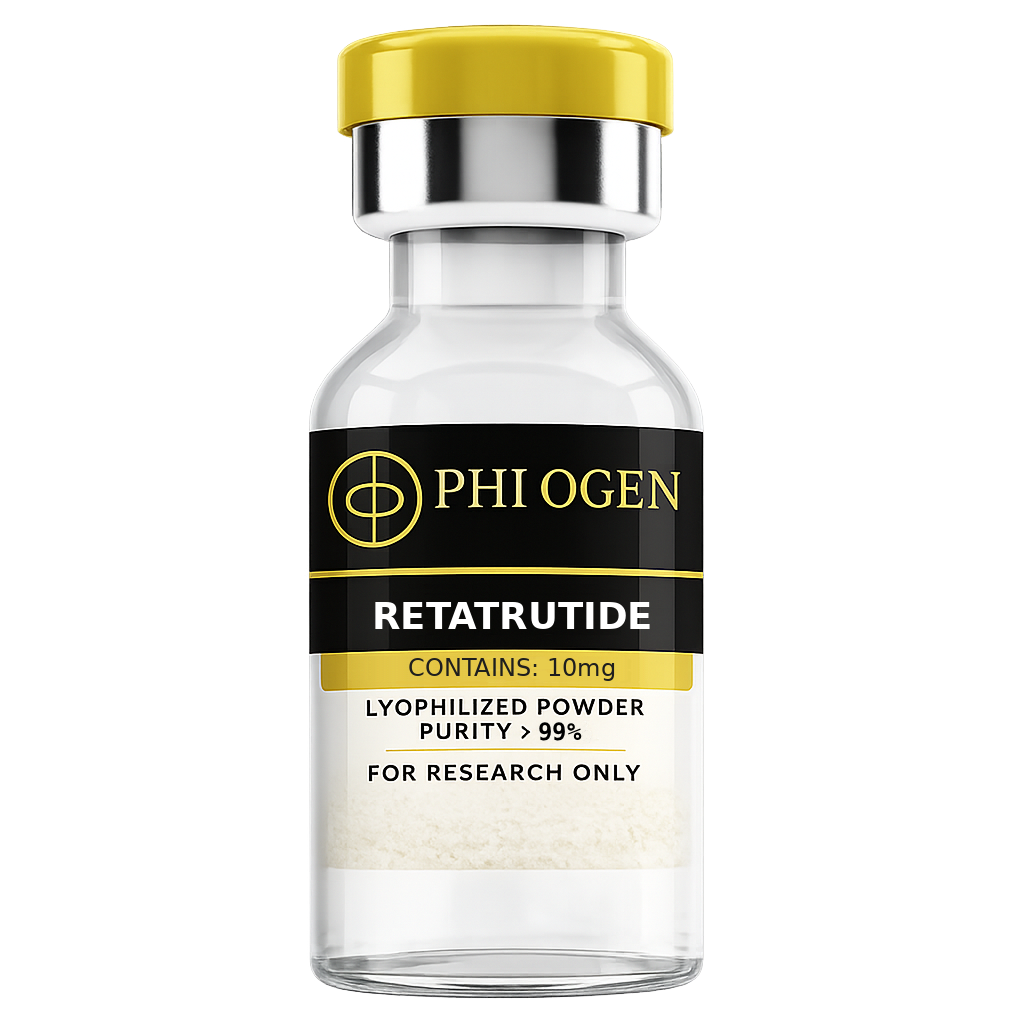
The selection of starting dose in research protocols involving triple receptor agonists is not arbitrary — it reflects both pharmacodynamic and pharmacokinetic considerations specific to each receptor system and their interactive effects. The 10mg dose of retatrutide occupies an important research position between the 8mg Phase 2 arm (the penultimate dose studied) and the 12mg maintenance dose of the highest efficacy arm. Understanding why this dose range represents a strategically significant research calibration point requires examining each receptor axis's dose-occupancy relationship and the pharmacological consequences of GcgR engagement as dose increases.
The GcgR component of the triple mechanism is the most dose-sensitive in terms of adverse effect profile. While GLP-1R and GIPR agonism produces adverse effects (primarily nausea and gastrointestinal transit changes) that are relatively well-tolerated and manageable through gradual dose escalation, GcgR agonism introduces a distinct set of physiological responses — increased heart rate, elevated blood pressure, enhanced ketogenesis, and potential effects on bone metabolism — that scale with plasma concentration. At low doses (1-4mg range), GcgR occupancy is modest and the thermogenic/lipolytic contributions are correspondingly limited. In the 8-12mg range, GcgR occupancy increases substantially, and the thermogenic contribution becomes a dominant driver of weight reduction beyond what GLP-1R and GIPR axes can achieve alone.
The 10mg dose therefore serves a dual research purpose. First, it allows investigation of pharmacodynamics at near-maximal GLP-1R and GIPR occupancy while capturing meaningful but not maximal GcgR engagement — a configuration that is useful for isolating the incremental GcgR contribution through controlled comparison studies. Second, it represents the dose at which researchers can study the dose-dependent GcgR effects on key endpoints (thermogenesis, hepatic lipid flux, ketone body production, heart rate) in human research subjects with a more favorable benefit-risk profile than the 12mg maintenance dose, which requires several weeks of prior lower-dose exposure to achieve tolerability.
For research protocols beginning at the 10mg dose rather than titrating up from lower doses, the pharmacokinetic steady-state timeline is particularly important. Initiating at 10mg without prior dose escalation will result in higher peak plasma concentrations relative to a titrated approach, with commensurately greater early GcgR-mediated effects. Research designs using the 10mg dose should pre-specify whether they are studying the effect at this dose level directly or using it as a starting point for further escalation, as the two paradigms produce different pharmacodynamic exposure profiles during the first 4-6 weeks of treatment.
Dose Escalation Protocols in the Literature: Phase 2 Titration Schedule and Research Adaptations
The dose escalation protocol employed in the Phase 2 retatrutide trial was carefully designed to balance the competing objectives of reaching effective plasma concentrations rapidly while allowing receptor downregulation and compensatory physiological adaptation to proceed at a biologically appropriate pace. The published escalation schedule serves as the primary reference for research protocol design and provides the basis for understanding how the 10mg dose relates to steady-state pharmacology at multiple dose levels.
The Phase 2 escalation schedule began at 1mg/week for 4 weeks, escalated to 2mg/week for 4 weeks, then 4mg/week for 4 weeks, and continued in a stepwise fashion through 8mg to reach the 12mg maintenance dose in the highest arm. Each 4-week step was designed to allow steady-state achievement (approximately 4-5 half-lives at 6 days = 24-30 days = 4 weeks) before assessing tolerability and proceeding to the next dose level. This pharmacokinetically grounded escalation approach is distinct from purely symptom-driven titration protocols that advance dose only when GI symptoms resolve — the Phase 2 schedule advances based on time regardless of symptom status (within safety bounds), reflecting the expectation that adaptive tolerance to GI effects typically develops within 2-4 weeks of initiating a new dose level.
For research applications using the 10mg lyophilized preparation, practical dose escalation considerations include the reconstitution volume calculations required at each escalation step. If a 10mg vial is reconstituted to a total volume of 2mL using bacteriostatic water, the resulting concentration is 5mg/mL. A 1mg research dose would require a 0.2mL injection volume; a 4mg dose would require 0.8mL; and an 8mg dose would require 1.6mL — all within typical subcutaneous injection volume tolerances. This concentration allows the full escalation range from 1mg to 8mg to be administered from a single vial reconstitution without requiring multiple reconstitutions at different concentrations, simplifying protocol logistics. For the 10mg target dose itself, the full 2mL volume would be required, which represents the upper limit of comfortable single-site subcutaneous injection.
Literature from tirzepatide Phase 2 and 3 trials provides relevant context for escalation pace tolerance, as the GIP/GLP-1 dual agonist experience informs expectations for the triple agonist. Analyses of dropout rates due to GI adverse events in tirzepatide trials showed that faster escalation schedules (every 2 weeks) doubled the GI adverse event-related discontinuation rate compared to standard 4-week escalation. Extrapolating this finding to retatrutide, where the additional GcgR axis may amplify certain adverse effect patterns, supports conservative adherence to 4-week minimum intervals between dose escalation steps in research protocols.
Per-Milligram Cost Analysis and Research Budget Optimization
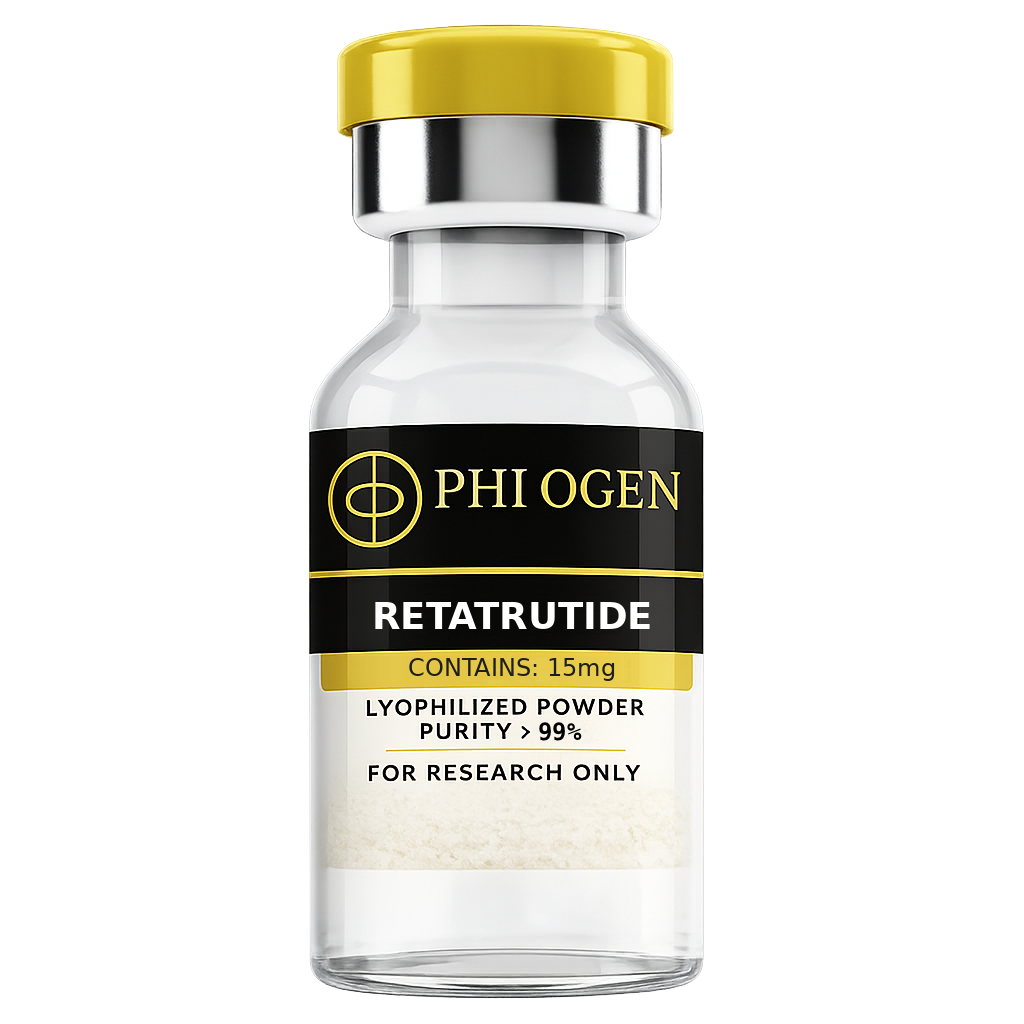
Research peptide procurement decisions for multi-experiment programs often involve comparative cost analysis across different unit sizes to optimize per-experiment cost while maintaining inventory integrity. The 10mg preparation of retatrutide offers a specific cost-efficiency profile relative to the 15mg preparation that is relevant for research programs requiring multiple low-to-mid-dose experiments or extended dose-escalation titration series.
The per-milligram cost structure for research grade peptides reflects synthesis complexity, purification yield, and packaging overhead. For high-complexity conjugated peptides like retatrutide — which incorporates non-natural amino acids, a fatty acid conjugation, and a PEG linker — synthesis cost per milligram is relatively fixed regardless of unit size, but the fixed overhead costs of lyophilization, analytical testing, documentation, and vial packaging are amortized across a larger peptide quantity in larger unit sizes. This creates a unit-size discount that typically scales from 5-25% per milligram as total peptide quantity per vial increases. Researchers should calculate actual per-milligram cost from current pricing to determine the break-even experiment count at which the 15mg preparation becomes cost-superior to the 10mg unit for their specific protocol design.
For research programs specifically investigating the dose escalation phase — the first 12-16 weeks of a protocol running 1mg through 8mg weekly doses — the 10mg vial is often the more efficient procurement unit. A 12-week escalation from 1mg to 8mg (following a 1/2/4/8mg weekly schedule over 4-week intervals) requires approximately 12mg of total peptide for one subject equivalent, meaning the 10mg vial provides coverage through approximately 8mg weekly doses, with the 15mg vial providing substantial surplus beyond this escalation phase. For programs with tight budget constraints and a primary research objective focused on the escalation phase pharmacodynamics rather than high-dose maintenance effects, the 10mg preparation avoids procurement of surplus peptide that may degrade during extended storage.
Conversely, research programs investigating the 8mg-12mg dose range exclusively — the range most relevant to the maximum efficacy data from Phase 2 — will find the 10mg vial insufficient for extended single-subject protocols without multiple purchases. The 15mg vial in this context offers not only per-milligram savings but also reduced reconstitution frequency and fewer lot-to-lot consistency concerns. Research coordinators should document the reconstitution date, concentration, and storage conditions for each vial preparation and implement a quality control checklist that includes visual inspection, pH verification if applicable, and peptide activity confirmation at the start of each new vial to ensure experimental reproducibility across procurement batches.
Reconstitution Protocol: Bacteriostatic Water, Concentration Calculations, and Storage Standards
Accurate reconstitution of lyophilized retatrutide is foundational to experimental reproducibility. Errors in reconstitution — whether in the volume of diluent added, the choice of diluent, or the handling conditions during and after reconstitution — propagate directly into dose inaccuracies that can confound dose-response relationships and compromise data quality. A standardized reconstitution protocol for the 10mg preparation is therefore a prerequisite for well-controlled research.
Bacteriostatic water for injection (BWFI) is the standard diluent for research peptides intended for multiple-use vials. BWFI contains 0.9% benzyl alcohol as a bacteriostatic preservative, which inhibits microbial growth across the 28-day post-reconstitution storage window recommended for multi-draw research preparations. The benzyl alcohol concentration in BWFI is well below the threshold of peptide denaturation or receptor binding interference for most research peptides, and no specific interactions with retatrutide's fatty acid conjugation or peptide backbone have been reported. Plain sterile water for injection (SWFI) is acceptable for single-use reconstitution but does not provide microbial protection for multi-draw preparations and should not be used for vials from which multiple aliquots will be withdrawn over days or weeks.
For a 10mg retatrutide vial, the recommended reconstitution target concentration depends on the planned dose range. For protocols using doses in the 1-5mg range, a concentration of 2mg/mL (reconstitute with 5mL BWFI) provides convenient injection volumes between 0.5mL and 2.5mL. For protocols using doses in the 5-10mg range, a concentration of 5mg/mL (reconstitute with 2mL BWFI) provides injection volumes between 1mL and 2mL, which are more appropriate for subcutaneous administration tolerability. Researchers should select the concentration that minimizes both the required injection volume at their target dose and the number of reconstitutions required per experiment series.
Reconstitution technique is as important as volume accuracy. Lyophilized peptide should be allowed to equilibrate to room temperature before opening the vial to prevent condensation on the powder. BWFI should be injected slowly against the vial wall rather than directly onto the peptide cake to minimize foaming and mechanical disruption of the peptide structure. The vial should be gently rotated — never vortexed or shaken vigorously — until the lyophilized material is fully dissolved. Visual inspection should confirm a clear, colorless to faintly yellow solution without visible particulates; turbidity or significant coloration indicates potential degradation or contamination.
Storage standards: lyophilized, unreconstituted retatrutide should be stored at -20°C and is stable for the manufacturer-specified shelf life under these conditions, typically 24 months. Reconstituted solutions should be stored at 2-8°C (standard laboratory refrigerator) and used within 28 days. Freeze-thaw cycling of reconstituted solutions is not recommended, as repeated freezing and thawing of albumin-binding fatty acid-conjugated peptides can induce aggregation through hydrophobic interactions. If reconstituted material must be stored beyond the 28-day window, single-use aliquots frozen at -80°C in low-binding polypropylene tubes and thawed once are preferable to repeated freeze-thaw of a single multi-use vial.
Why Lower Starting Doses Matter for GcgR Axis Research: Receptor Adaptation and Baseline Characterization
Research programs investigating the specific contribution of glucagon receptor engagement to retatrutide's pharmacological profile face a fundamental methodological challenge: isolating the GcgR-mediated component from the concurrent GLP-1R and GIPR effects requires either selective receptor blockade experiments or careful characterization of the dose-dependent GcgR occupancy pattern. The 10mg dose, approached through a titrated escalation from lower starting doses, provides a mechanistically important research configuration that cannot be replicated by starting at the 10mg dose directly.
Glucagon receptor biology in the context of sustained agonist exposure involves adaptive regulation that is dose-dependent. Prolonged GcgR agonism induces receptor downregulation through internalization and reduced transcription of the GcgR gene — effects that have been documented in preclinical models with sustained glucagon infusion and with GcgR agonist compounds. The degree of receptor downregulation correlates with the area under the concentration-time curve (AUC) of GcgR agonism, meaning that research subjects exposed to lower doses for several weeks before reaching the target dose will have a partially adapted GcgR system compared to those naive to GcgR agonism. This adaptive state may paradoxically improve tolerability of GcgR-mediated effects while potentially reducing the acute thermogenic response to dose escalation — a trade-off that has direct relevance for experimental design depending on whether the research objective is to characterize maximum acute GcgR response or to study steady-state GcgR biology under chronic exposure.
For baseline characterization research — studies designed to establish pharmacodynamic markers of GcgR engagement at the 10mg dose level — a titrated approach from lower starting doses produces a more physiologically representative steady state than direct initiation at 10mg. Markers of GcgR engagement that are useful in research contexts include: fasting glucagon levels (which decrease paradoxically with sustained agonism due to alpha cell GcgR-mediated feedback); plasma beta-hydroxybutyrate as a proxy for GcgR-stimulated hepatic ketogenesis; resting energy expenditure measured by indirect calorimetry; and heart rate variability parameters reflecting the sympathomimetic component of GcgR-mediated thermogenesis. Each of these markers will show different time-course profiles depending on whether the GcgR is being engaged for the first time (at 10mg initiation without prior dose escalation) versus at the end of a titration series where partial receptor adaptation has occurred.
The practical implication for research using the 10mg preparation as a starting point is that early timepoint pharmacodynamic data will reflect a different GcgR engagement state than later timepoint data, and this temporal pharmacodynamic shift must be accounted for in data analysis. Researchers should pre-specify the pharmacodynamic assessment timepoints relative to dose initiation and should collect multiple early timepoints (weeks 1, 2, 4) as well as steady-state timepoints (weeks 8, 12) to characterize the adaptation curve. This time-resolved approach to GcgR pharmacodynamic characterization is one of the most scientifically valuable uses of the 10mg dose format in structured research protocols.
Cardiovascular Risk Marker Research: Blood Pressure, Heart Rate, and Lipid Panel Changes
Retatrutide's multi-receptor pharmacology produces a complex and not entirely uniform cardiovascular risk marker profile — a characteristic that distinguishes it from GLP-1R monotherapy and makes it a particularly interesting compound for cardiovascular research applications. The opposing cardiovascular tendencies of its component receptor systems create a net effect that must be understood through careful examination of each axis's hemodynamic and metabolic contributions.
GLP-1R agonism has well-characterized cardiovascular effects that are broadly favorable. The LEADER and SUSTAIN-6 cardiovascular outcome trials demonstrated significant reductions in major adverse cardiovascular events (MACE) with liraglutide and semaglutide, attributed to anti-inflammatory effects on the arterial wall, modest blood pressure reduction, and favorable changes in triglycerides and HDL cholesterol. In the context of retatrutide, the GLP-1R component contributes these favorable vascular effects, including natriuretic properties that reduce renal sodium retention and lower preload. Blood pressure reductions of approximately 4-7 mmHg systolic were observed across active arms in the Phase 2 trial, consistent with the GLP-1R-mediated contribution.
The GcgR axis introduces a potentially countervailing cardiovascular signal. Glucagon receptor activation has chronotropic and inotropic effects on cardiac tissue, increasing heart rate and contractility through GcgR-cAMP-PKA signaling in cardiomyocytes. The Phase 2 trial reported mean heart rate increases of approximately 4-6 beats per minute in the highest-dose arms — a modest but pharmacologically consistent effect attributable to GcgR-mediated cardiac stimulation. This heart rate elevation is analogous to (though mechanistically distinct from) the heart rate increase observed with GLP-1R agonists, which increase heart rate through vagal withdrawal rather than direct cardiac receptor engagement. The superimposition of two distinct heart rate-increasing mechanisms in retatrutide warrants careful monitoring in cardiovascular research applications, particularly in subjects with preexisting arrhythmia substrates or rate-sensitive conditions.
Lipid panel changes from the Phase 2 trial reflected the combined effects of substantial weight reduction and direct receptor-mediated lipid metabolism effects. Total cholesterol, LDL cholesterol, and non-HDL cholesterol all showed mean reductions of 10-20% from baseline, changes attributable to both weight-mediated hepatic lipid handling improvements and the direct anti-lipogenic effects of GcgR signaling in hepatocytes. Triglyceride reductions were particularly pronounced — mean reductions of 35-45% from baseline in the highest-dose arms — substantially exceeding triglyceride improvements observed with weight-matched GLP-1R monotherapy, again consistent with GcgR-mediated reduction in hepatic VLDL triglyceride synthesis. HDL cholesterol showed modest increases consistent with weight reduction effects. For research programs focused on cardiovascular risk biomarker profiles, retatrutide's Phase 2 lipid data provide a compelling research target for mechanistic investigations of pharmacologically induced atherogenic lipid profile normalization.
Comparative Mechanism at Lower Doses: Differentiating from Semaglutide and Tirzepatide in the 5-10mg Range
A nuanced understanding of how retatrutide at 10mg mechanistically differs from tirzepatide and semaglutide requires more than a comparison of summary efficacy statistics — it demands examination of which receptor axes are meaningfully engaged at each dose level and what the pharmacodynamic signature of each agent's dominant receptor mechanism looks like in quantitative terms. In the 5-10mg dose range, the three agents occupy different points in their respective dose-occupancy curves, producing distinct pharmacodynamic profiles that translate into different research use cases.
Semaglutide at its maximum approved dose of 2.4mg weekly operates near GLP-1R saturation, with estimated receptor occupancy in the 85-95% range based on plasma concentration-receptor binding affinity relationships. This means that the incremental pharmacodynamic benefit of higher semaglutide doses is limited by receptor saturation, and the observed -14.9% mean weight reduction in STEP 1 likely represents near-maximal GLP-1R-mediated weight reduction in the obese population. Research use of semaglutide in the 5-10mg range is not clinically relevant (doses above 2.4mg are not established in human research), making direct dose-range comparison with retatrutide in this range inapplicable. The comparison remains meaningful at the outcome level: the additional receptor axes in retatrutide produce effects that a fully saturated GLP-1R system cannot replicate regardless of further GLP-1R agonist dose increases.
Tirzepatide at 10mg weekly represents an approximately mid-to-high point on its dose-response curve, where both GLP-1R and GIPR occupancy are substantial. The mean weight reduction with tirzepatide 10mg at 72 weeks in SURMOUNT-1 was approximately 20.9%, compared to 22.5% with 15mg — indicating that 10mg captures approximately 93% of the maximum effect achievable with tirzepatide. In research applications, tirzepatide 10mg is therefore a near-ceiling dose for the dual GLP-1/GIP mechanism. Retatrutide 10mg, in contrast, is not near the ceiling of the triple mechanism — the Phase 2 data show meaningful additional efficacy between the 8mg and 12mg arms, and the GcgR thermogenic contribution continues to scale above 10mg. This means retatrutide 10mg research data capture a different mechanistic state: meaningful but sub-ceiling GcgR engagement alongside near-ceiling dual incretin activity.
For researchers specifically interested in the incremental GcgR contribution — attempting to isolate what glucagon receptor engagement adds above and beyond dual incretin agonism — the 10mg dose is mechanistically well-positioned. At this dose level, comparing retatrutide outcomes to tirzepatide outcomes in matched populations provides a meaningful estimate of the GcgR contribution, as both compounds are operating at comparable GLP-1R and GIPR engagement levels while retatrutide adds the GcgR component. This comparative framework is one of the most scientifically productive uses of the 10mg dose in translational research designs.
Research Applications in Insulin Resistance and Type 2 Diabetes Prevention Models
The insulin sensitizing effects of retatrutide, observable even at the 10mg dose level, extend well beyond what can be explained by adiposity reduction alone and reflect direct receptor-mediated effects on key nodes of insulin signaling. This makes the 10mg dose an informative research tool for investigations of insulin resistance mechanisms, particularly in early-stage metabolic dysfunction where the signal-to-noise ratio for detecting pharmacological improvements in insulin sensitivity is more favorable than in advanced disease.
Insulin resistance in obesity involves multiple concurrent defects: impaired insulin receptor substrate phosphorylation in skeletal muscle, aberrant hepatic insulin signaling leading to concurrent gluconeogenesis and lipogenesis (the "selective insulin resistance" phenomenon), dysfunctional adipose tissue insulin signaling reducing suppression of lipolysis, and chronic low-grade inflammation amplifying insulin signal interference through serine kinase activation. The GLP-1R, GIPR, and GcgR axes each address different aspects of this multifactorial pathophysiology. GLP-1R agonism improves hepatic insulin sensitivity through reduction of glucotoxicity and lipotoxicity, GIPR agonism has direct insulin-sensitizing effects in adipose tissue, and GcgR-mediated reduction in hepatic triglyceride content reduces the lipid-induced insulin receptor pathway interference in hepatocytes.
Fasting insulin and HOMA-IR data from the Phase 2 trial, though derived from a predominantly non-diabetic population, provide relevant signals for insulin resistance research applications. Mean HOMA-IR reductions of 50-65% from baseline in the highest-dose arms substantially exceed what would be predicted from weight loss alone based on established weight-HOMA relationships from diet and exercise studies. The excess insulin sensitization — attributable to the pharmacological receptor effects beyond weight loss — is a research-relevant signal for understanding the mechanisms through which incretin-glucagon axis engagement improves cellular insulin responsiveness independently of adiposity changes.
For type 2 diabetes prevention research, the 10mg dose of retatrutide is particularly relevant for studying the transition from insulin resistance with preserved beta cell compensation (prediabetes) to frank beta cell failure (type 2 diabetes). The combination of weight reduction, direct beta cell enhancement through GLP-1R and GIPR, reduced glucotoxicity from GcgR-mediated effects, and insulin sensitivity improvement creates a multi-mechanism protective environment against beta cell exhaustion. Research protocols examining the durability of these effects — specifically whether the improvements in beta cell function markers (HOMA-B, C-peptide release patterns, acute insulin response to glucose) persist after peptide discontinuation or represent pharmacodynamic-dependent improvements — would provide fundamental insights into whether the protective effects reflect genuine remission of metabolic dysfunction or temporary pharmacological compensation.