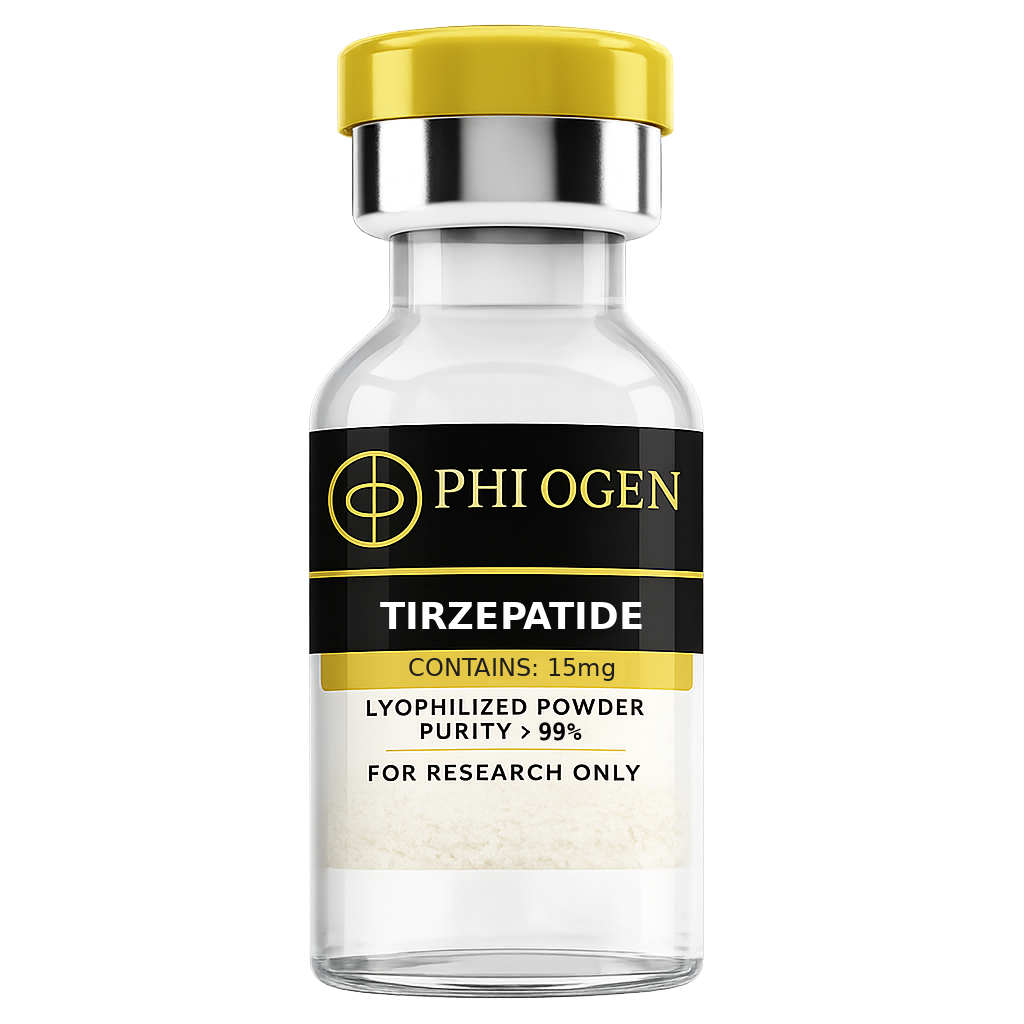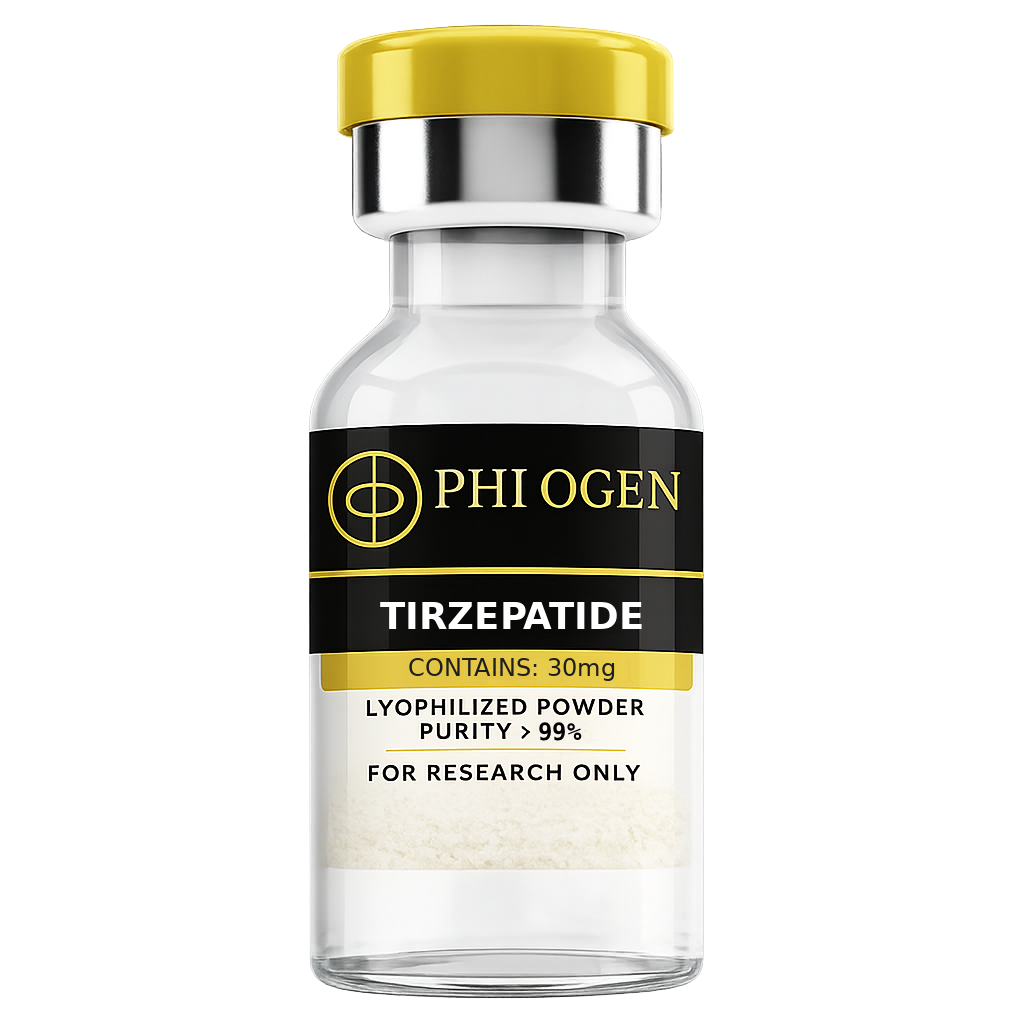
Multi-Vial Research Protocol Design: Why the 5-Pack Format Matters
The 20 mg × 5-pack format — providing 100 mg of tirzepatide across five individually sealed vials — is specifically suited to research protocols that require sequential dosing over multiple weeks, consistent lot provenance across all doses in a longitudinal study, and inventory uniformity that eliminates inter-vial variability as a potential confound. For research teams operating under documented protocols, having five vials from a single production lot ensures that any batch-specific variation in peptide purity, endotoxin level, or residual moisture content is constant across the experimental timeline.
Each 20 mg vial in the 5-pack provides two complete 10 mg research doses or a single 15 mg dose with 5 mg remaining for supplementary in vitro work. Alternatively, the 20 mg vial supports four sequential 5 mg doses — the starting dose in most tirzepatide titration ladders — enabling a full four-week initial period from one vial before advancing to a new vial at the next dose level. This vial-per-phase structuring simplifies laboratory recordkeeping and ensures each escalation period has a dedicated, freshly reconstituted peptide source.
The rationale for multi-vial procurement in longitudinal metabolic research is strongly supported by the pharmacological data: tirzepatide's clinical benefits in both glycemic control and body weight reduction are time-dependent processes that do not plateau at 4 weeks. SURMOUNT-1 data show continued weight loss progression through at least week 36, with the maximum rate of weight reduction occurring between weeks 8 and 20. Research designs that terminate at 4 or 8 weeks therefore capture only the early phase of the metabolic response. The 5-pack format operationalizes the multi-month research horizon that is necessary to observe the full range of tirzepatide's documented effects.
From a project management perspective, multi-vial sets allow research teams to preplan the full experimental timeline at procurement, avoiding supply chain delays that could introduce gaps in dosing schedules. Interruption of dosing in ongoing tirzepatide research is associated with partial reversal of metabolic effects, as documented in the SURMOUNT-1 extension substudy, which showed that weight regain begins within 4–8 weeks of cessation. Continuous procurement planning with the 5-pack unit prevents protocol interruption.
Dose Escalation Schedule Research: Weeks 1–20 Titration Framework
The FDA-approved tirzepatide prescribing information specifies a mandatory dose-escalation schedule to minimize gastrointestinal tolerability events. The approved starting dose is 2.5 mg once weekly for 4 weeks, with subsequent increases of 2.5 mg every 4 weeks as tolerated, advancing through 5, 7.5, 10, 12.5, and finally 15 mg. This 20-week escalation ladder is not merely a safety convenience — it is mechanistically justified by data on GLP-1R and GIPR receptor internalization kinetics.
At the initiation of tirzepatide treatment, GLP-1R surface density in hypothalamic neurons is at baseline. Acute high-dose GLP-1R activation before receptor accommodation produces intense nausea through area postrema activation (the CNS nausea center that expresses high-density GLP-1R). The slow titration allows GLP-1R internalization and recycling to reach a new steady-state at each dose level before advancement, effectively calibrating the nausea threshold upward stepwise. Receptor accommodation at each step takes approximately 3–4 weeks, which is the biological basis for the 4-week interval between dose increases.
Research into dose escalation schedules using the 5-pack format can examine several open questions. First, whether alternative titration speeds — for example, 2-week intervals versus 4-week intervals — change the receptor accommodation kinetics while maintaining tolerability. Second, whether individual variation in GLP-1R expression density (which has documented genetic polymorphisms including the Exon 9 splice variant) predicts optimal titration pace. Third, whether co-administration of anti-emetic agents during the early titration phases alters the receptor accommodation timeline or ultimately changes efficacy at the maintenance dose.
The 5-pack format at 20 mg per vial is particularly well-matched to a 20-week full-escalation research design. The cumulative dose across the standard 20-week ladder (2.5×4 + 5×4 + 7.5×4 + 10×4 + 12.5×4 = 150 mg) plus an initial 4-week maintenance phase at 15 mg (15×4 = 60 mg) totals 210 mg — which is covered with 10.5 × 20 mg vials, making a 5-pack a natural procurement unit for a half-study set or a two-subject parallel design.
Immunogenicity Research with Repeated Administration
Immunogenicity — the formation of anti-drug antibodies (ADAs) against therapeutic peptides — is a critical safety and efficacy consideration for any peptide administered repeatedly over extended periods. For tirzepatide, immunogenicity data from the SURPASS clinical trial series provide the foundational clinical reference for translational and preclinical immunogenicity research.
In the SURPASS pooled analysis, approximately 37–51% of participants developed detectable anti-tirzepatide antibodies at some point during the trials. Of these, approximately 1–3% developed neutralizing antibodies — antibodies with the capacity to block receptor activation and therefore potentially reduce pharmacological effect. Crucially, ADA formation did not correlate with reduced HbA1c efficacy or reduced weight loss in the clinical populations studied, suggesting that either the neutralizing antibody titers were insufficient to significantly displace the drug from its receptors in vivo, or that non-neutralizing antibodies predominate and are pharmacologically inert.
For research using repeated administration across the 5-vial set — which by design implies multi-week protocols — immunogenicity monitoring should be incorporated as a parallel endpoint if the research design involves living subjects. The relevant assay methodology is bridging ELISA with acid dissociation to detect ADA in the presence of excess drug. The detection limit and drug tolerance of the assay are critical performance characteristics because high circulating drug concentrations at maintenance doses can mask ADA detection through competitive binding.
The GIP peptide epitopes in tirzepatide — particularly the C-terminal fatty acid–modified lysine residue that anchors albumin binding — appear to be the primary ADA targets. This is pharmacologically consistent with the observation that GIP itself (a natural endogenous peptide) is generally non-immunogenic, but the fatty diacid modification introduces novel epitopes. Research teams using the 5-pack for extended protocol work should document ADA status at baseline, mid-study (week 8–10), and end-of-study as minimum sampling timepoints.
Storage and Inventory Management for Research Laboratories
Proper storage and inventory management of multi-vial peptide sets is a prerequisite for research data reproducibility and regulatory compliance in any GLP-compliant research environment. Tirzepatide lyophilizate vials require storage at −20°C (±5°C) in the dark, away from moisture and oxidizing agents. The 5-pack format, delivered as five individually foil-sealed vials, allows sequential opening without exposing the entire inventory to ambient conditions simultaneously.
Inventory management best practices for the 5-pack include establishing a vial log with unique identifier per vial, recording the date of receipt, lot number, reconstitution date, reconstitution volume, and the date and amount of each aliquot withdrawal. Research-grade peptide facilities commonly use barcode-labeled cryovial systems for aliquot tracking, linking each downstream experiment to the specific source vial and reconstitution event. This chain-of-custody documentation is essential for troubleshooting inter-experiment variability and for retrospective analysis if unexpected assay results require investigation.
Reconstitution stability is a function of both pH and temperature. Tirzepatide is formulated for reconstitution in sterile water or phosphate-buffered saline at physiological pH (7.0–7.4). At 4°C post-reconstitution, tirzepatide maintains greater than 95% purity by HPLC for at least 14 days when stored in siliconized vials that minimize adsorption to glass surfaces. At room temperature, this window narrows to approximately 48–72 hours. Research protocols that spread administration across multiple days from a single reconstituted stock should validate their stability window with an initial mass spectrometric or HPLC purity check before deploying the reconstituted material.
For labs managing the 5-pack across a multi-month protocol, a staggered reconstitution calendar — opening and reconstituting each vial within 1–2 weeks of its intended use — provides optimal material integrity while simplifying inventory forecasting. A written SOP for the reconstitution procedure, including verification of lyophilized cake integrity (no signs of collapse or discoloration) before reconstitution, is a fundamental quality control step.
Pharmacokinetic Profile: Half-Life, Steady State, and Weekly Dosing Rationale
Tirzepatide's pharmacokinetic profile is characterized by a mean terminal half-life of approximately 5 days (118 hours) following subcutaneous injection, which is the pharmacological basis for the once-weekly dosing schedule. The long half-life is engineered through the same albumin-binding fatty diacid moiety responsible for the immunogenicity considerations discussed above: the C20 diacid tethered to the K26 position via a mini-PEG linker binds non-covalently to serum albumin (affinity ~10 µM), which acts as a depot, dramatically extending the effective plasma half-life compared to the 2–5 minute half-life of endogenous GLP-1.
Steady-state plasma concentrations with once-weekly dosing are achieved at approximately 4 weeks (consistent with the five-half-life rule: 5 × 5 days = 25 days ≈ 4 weeks). At steady state with the 15 mg dose, peak plasma concentrations (Cmax) are approximately 308 ng/mL, with trough concentrations (Cmin) of approximately 145 ng/mL, yielding a peak-to-trough ratio of approximately 2:1. This relatively flat concentration profile — compared to shorter-acting GLP-1 receptor agonists — is associated with more stable 24-hour appetite suppression and less pronounced prandial nausea.
The 20 mg × 5-pack is directly relevant to steady-state pharmacokinetic research because protocols seeking to characterize steady-state exposure must dose for a minimum of 4 weeks before plasma sampling. A 5-vial set at 20 mg enables 10 weekly 10 mg doses or 6 weekly 15 mg doses with residual material — both sufficient to achieve true steady state and collect multiple sampling timepoints within the steady-state window.
For sub-population pharmacokinetic research, factors known to influence tirzepatide exposure include body weight (inverse relationship due to volume of distribution scaling), renal function (minimal renal excretion of intact peptide — primary elimination is proteolytic degradation — but severe renal impairment alters protein binding and exposure), and injection site (thigh vs. abdomen vs. upper arm produce comparable bioavailability with CV approximately 30–40% for Cmax). Research designs using the 5-pack should document injection site as a protocol variable to control for this source of pharmacokinetic variability.
Metabolic Biomarker Panel Design for Multi-Week Protocols
Extended multi-week research protocols enabled by the 5-pack format allow comprehensive metabolic biomarker characterization that is not possible in single-dose or short-duration studies. A well-designed metabolic biomarker panel for tirzepatide research should be stratified by measurement timing: some biomarkers show acute changes within the first 1–2 weeks, while others reflect processes that evolve over 8–20 weeks.
Acute biomarkers (week 1–4 changes): fasting plasma glucose, fasting insulin, HOMA-IR, glucagon, GIP, GLP-1, C-peptide, total and LDL cholesterol, and triglycerides. These markers reflect the immediate insulinotropic and glucagonostatic actions of tirzepatide and the early shift in hepatic lipoprotein metabolism. Fasting triglyceride reductions of 20–30% have been documented within the first 4 weeks of 15 mg tirzepatide, reflecting early suppression of hepatic VLDL secretion.
Intermediate biomarkers (week 4–12): HbA1c, fructosamine, adiponectin, leptin, IL-6, hsCRP, free fatty acids (fasting and postprandial), and alanine aminotransferase. HbA1c reflects the 8–12 week average glycemic exposure; given that the full HbA1c reduction requires approximately one full erythrocyte lifespan (120 days), meaningful changes will not be apparent before week 8. Adiponectin, which is secreted by adipose tissue and inversely correlated with central adiposity, increases with tirzepatide administration in a weight-loss–dependent manner.
Long-term biomarkers (week 12–20): body weight, body composition (DXA if available), waist circumference, blood pressure, eGFR, urine albumin-to-creatinine ratio (for renal endpoint research), fibronectin, and procollagen type III N-terminal peptide (P3NP, a fibrosis marker). These markers require the full duration of the 5-pack protocol to show statistically meaningful change and are the endpoints most relevant to cardiovascular risk research and NASH/MASH mechanistic studies.
Cost-Per-Dose Analysis for Research Budget Planning
Research budget planning for extended tirzepatide protocols requires careful cost-per-dose analysis, because multi-week designs represent substantial material investment. The 5-pack format typically provides cost efficiencies relative to equivalent single-vial procurement, which has direct implications for how research teams structure their acquisition strategy relative to experimental design.
At the 15 mg dose level, the 5-pack of 20 mg vials provides 5 × 20 mg = 100 mg total material, supporting 6.67 complete 15 mg doses (the residual 5 mg per vial can be directed to in vitro experiments, reducing waste). At the 10 mg dose level, the 5-pack provides 10 complete doses — a full 10-week steady-state study at once-weekly dosing, or a 5-week pair-comparison study with two parallel research subjects.
For dose-escalation protocols, the 5-pack material budget across a standard 20-week escalation ladder requires approximately 150 mg (see dose escalation section above). Two and a half 5-packs of 20 mg vials (250 mg total) cover the full escalation plus a 6-week maintenance phase at 15 mg, providing margin for protocol deviations or additional sampling timepoints that require material aliquots.
Research budget optimization should also account for the cost of accessory consumables: sterile water for reconstitution, siliconized vials for reconstituted aliquots, insulin-grade syringes (0.3–1.0 mL with fixed needles), sterile filters (0.22 µm) for sterility assurance of reconstituted stock, and cold chain shipping for inter-site transfer of pre-reconstituted aliquots in multi-center studies. These consumable costs are relatively minor compared to peptide procurement costs but should be included in protocol budget documentation for grant applications and IRB submissions.
Parallel Research Arms: Designing Multi-Subject Studies with the 5-Pack
The 5-pack format naturally lends itself to multi-subject parallel group research designs, which are statistically more powerful than single-subject crossover designs for most metabolic endpoints. A parallel group design assigns each subject to a single treatment condition, eliminating carryover effects that are particularly problematic for long-half-life compounds like tirzepatide. With a 5-day half-life, a wash-out period of at least 25 days (five half-lives) would be required before crossover to a different condition, which is operationally challenging in extended metabolic research protocols.
A 5-vial set at 20 mg can support different parallel group architectures. For a two-arm design (tirzepatide vs. control), with 10 mg weekly doses, the 100 mg pack supports 10 doses — sufficient for one subject at 10 weeks. Scaling to a five-subject single-dose study (n=5 at a single 15 mg dose) is another application, using one vial per subject for acute mechanism-of-action work.
Statistical power calculations for extended parallel group metabolic studies should be based on the primary endpoint variance observed in the SURMOUNT or SURPASS series. For body weight percent change as the primary endpoint, the within-group standard deviation at 72 weeks is approximately 8.8 percentage points (from SURMOUNT-1). To detect a 5 percentage point difference between arms with 80% power at α=0.05, a minimum of 25 subjects per arm is required — an n that demands a correspondingly larger peptide inventory. The 5-pack serves as the practical procurement unit for small-scale (n=1–5) mechanistic studies, while larger n designs require proportionally scaled procurement strategies.
Intra-study consistency is enhanced when all vials in a parallel design are from the same 5-pack lot. This eliminates lot-to-lot peptide purity variation as a confounder in between-subject comparisons and simplifies the analytical chemistry quality control process to a single lot certificate of analysis rather than multiple independent lot verifications.